Recipes & Insights

Plant-Based Karaage (Japanese Fried Chicken)
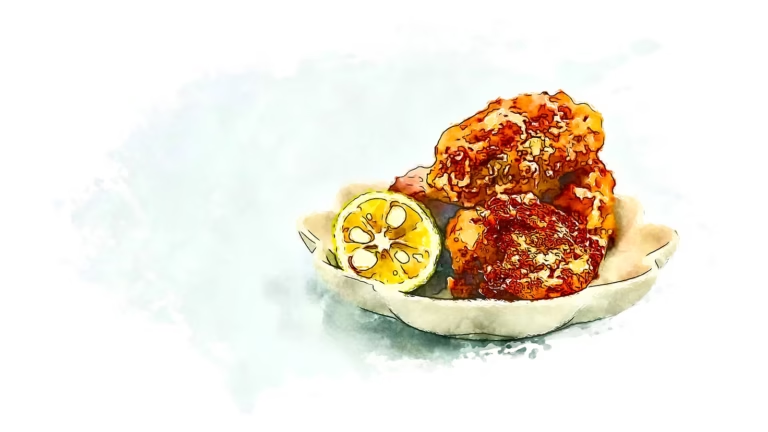
A plate of crispy plant-based Japanese fried chicken with half of a sudachi citrus.

Karaage represents one of Japan's most beloved comfort foods—crispy fried chicken found everywhere from convenience stores to izakayas. It's also what I knew I would miss most as I started my transition to a plant-based diet just over a year ago.

Knowing this, I set a challenge for myself: make non-meat versions of my favorite foods that rival—if not beat—the original. This plant-based adaptation delivers. From the signature crunchy exterior to the juicy interior, it checks all of the boxes.
Mikan & Orange Gelee with Mint

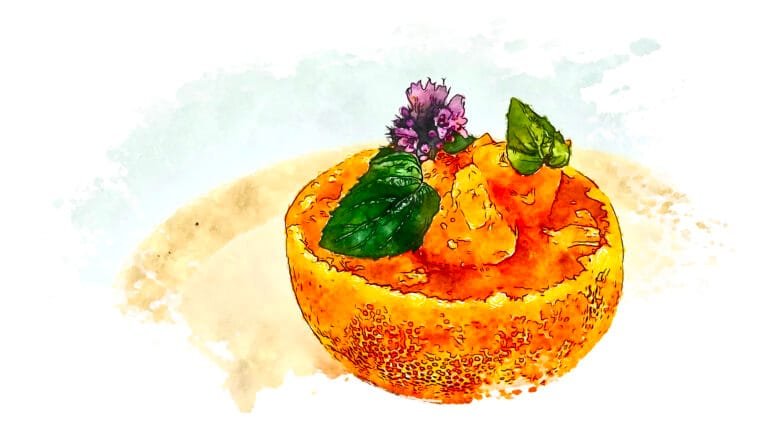
Mikan gelee garnished with mint and purple mint blossoms.

In the depths of winter, when the earth rests beneath frost and gardens lie dormant, citrus fruits offer a reminder that even in the coldest season, sweetness persists. This recipe for Mikan & Orange Gelée with Mint honors the Japanese principle of kisetsukan (季節感), the deep awareness of season. Kisetsukan is imbued with the Buddhist understanding of impermanence, reflected in the translucent beauty of this gelée, inviting us to pause, take in its natural beauty, and appreciate what is fleeting.

Bok Choy & Abura-Age Ohitashi

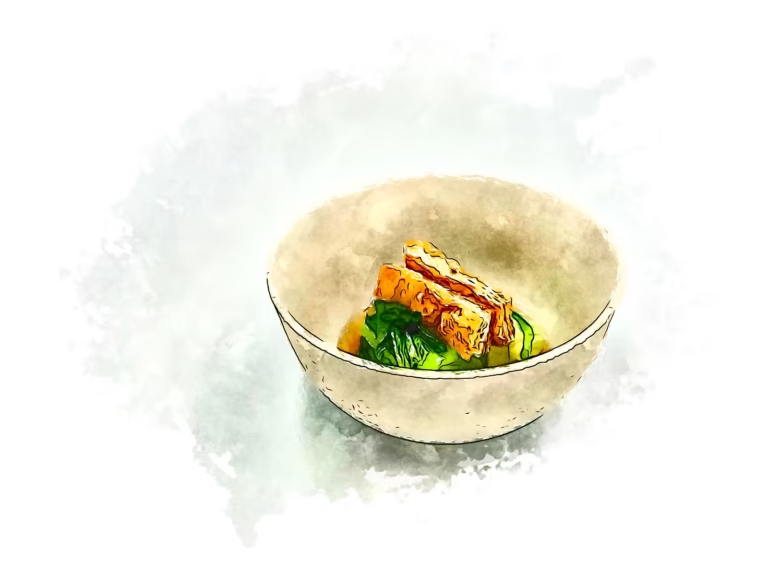
Watercolor image of bok choy and abura-age steeped in dashi plated in a white ceramic bowl.

The name of this technique — ohitashi — is derived from the Japanese verb hitasu (浸す), meaning to soak. It was first documented during the Sengoku period (1467-1615) as hitashimono: "soaked things." Bok choy's mild, slightly sweet flavor allows it to harmonize with other ingredients without overpowering them. That, along with the textural variation of its stems and leaves, makes it particularly well suited for this method.

Vegetable Futomaki Roll

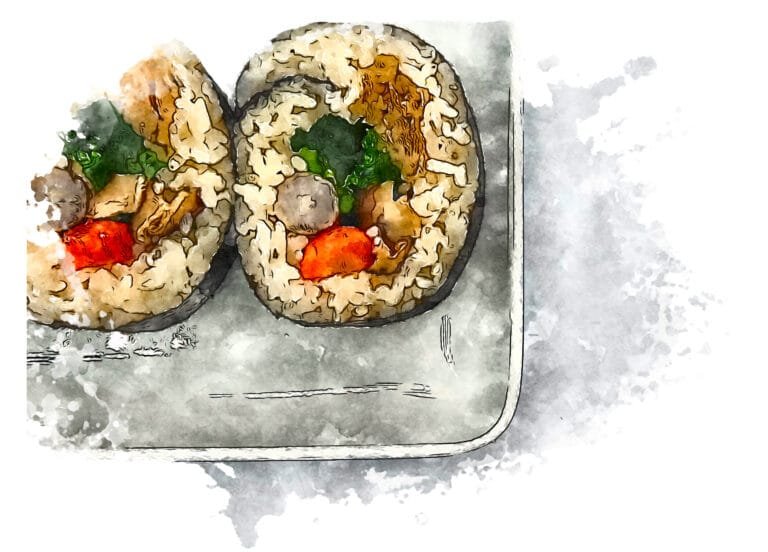
Slices of colorful vegetable futomaki (thick roll) arranged in a row.

When most people think of sushi, they instantly envision perfectly sliced bite-sized pieces of raw fish draped over warm rice seasoned with vinegar, sugar, and salt. Soy sauce and wasabi served on the side as a matter of course. But what if I told you that there is a rich history of sushi made exclusively from vegetables in Japan?

Sautéed Spinach & Shimeji Mushrooms

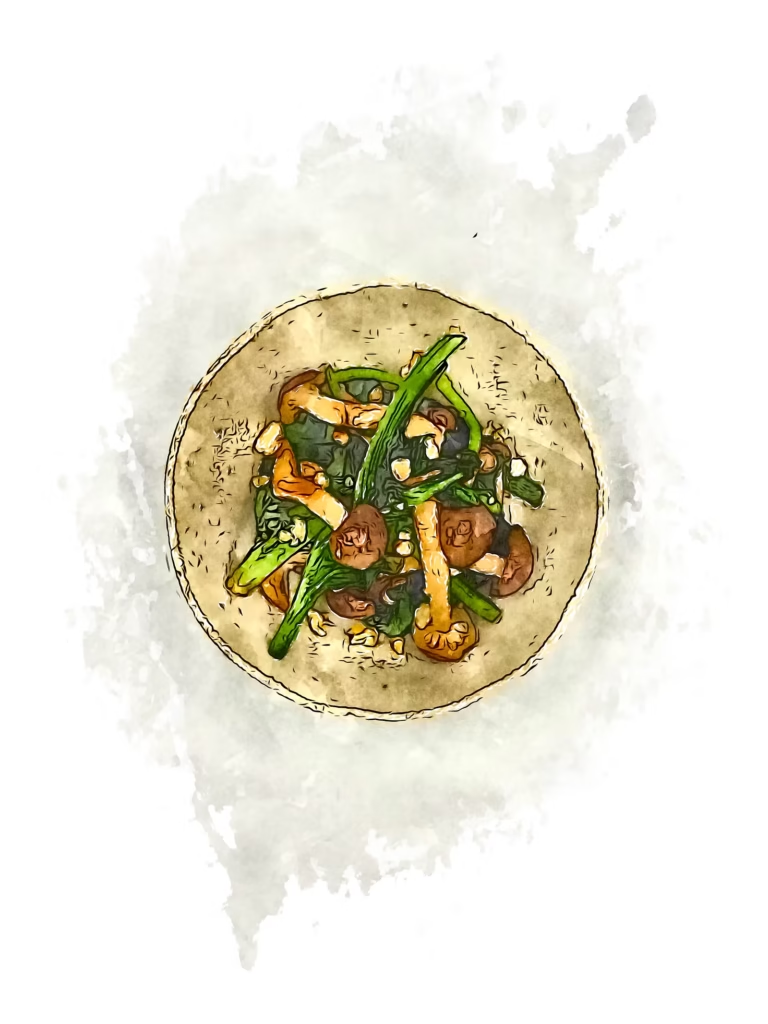
A glistening bowl of sauteed spinach and shimeji mushrooms.

This sautéed spinach with shimeji mushroom recipe exemplifies the Japanese idea ishoku dogen (医食同源): food and medicine share the same source. The simple preparation transforms humble ingredients into a nourishing side dish that supports your body's natural vitality, providing essential iron, B vitamins, while delivering satisfying umami depth in every bite.

Kiriboshi Daikon & Wakame Sunomono

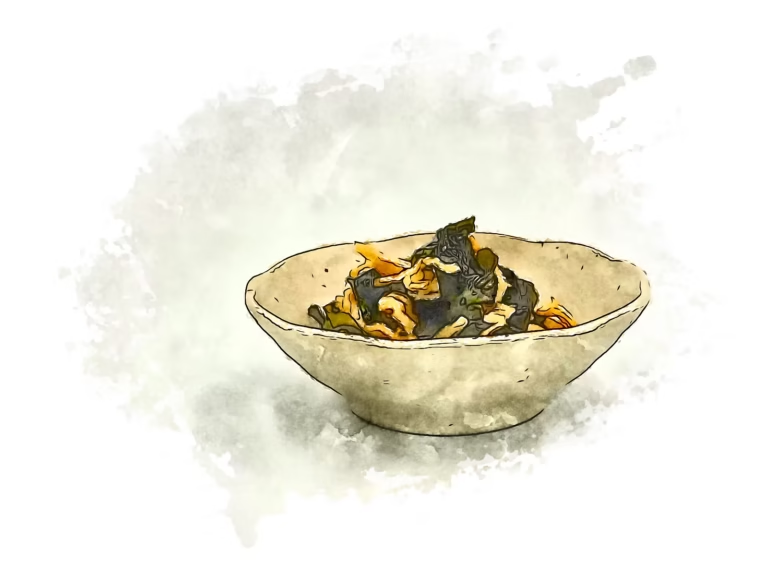
Strips of dried daikon with Hokkaido wakame dressed with sweetened vinegar.

Dressing and preserving foods with vinegar has been a staple of Japanese cuisine since the Nara period (710-794 CE), when Buddhist monks brought vegetarian cooking practices from China and adapted them to Japanese ingredients and sensibilities. Originally such dishes were referred to as hashi-yasume (箸休め), or "chopstick vacations," which was a nod to their role as a palate cleanser between richer courses. As part of the ichiju issai format they continue to play a similar role, balancing the sweetness of steamed rice and the saltiness of miso soup.

Kombu Dashi

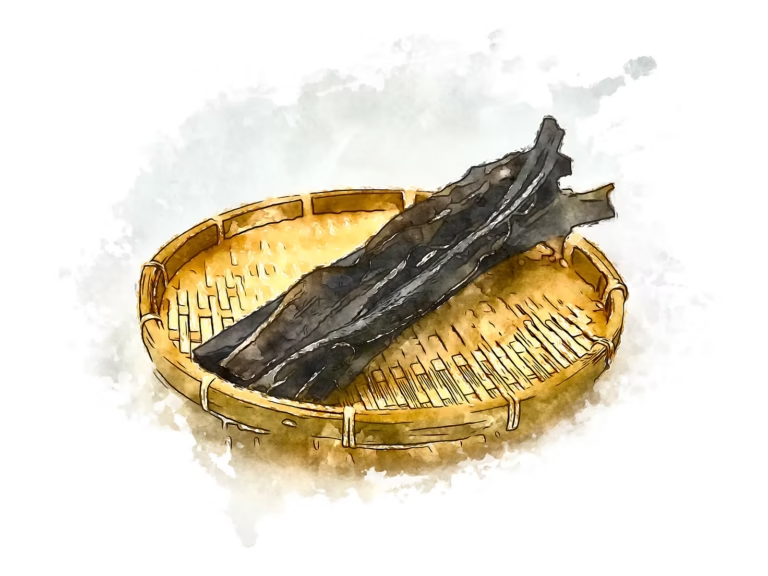
Dried kombu kelp strips with white mineral deposits resting on a round woven bamboo basket.

This is a simple recipe for kombu dashi, with zero-cooking involved. It does require patience, however: the steep time is 24 hours. If you are in a pinch this isn't going to be your go to recipe. That aside, it lasts for three days in the refrigerator. With minimal planning you can get this started and it will be ready to go by dinner time the following day.

Shiitake Mushroom Dashi

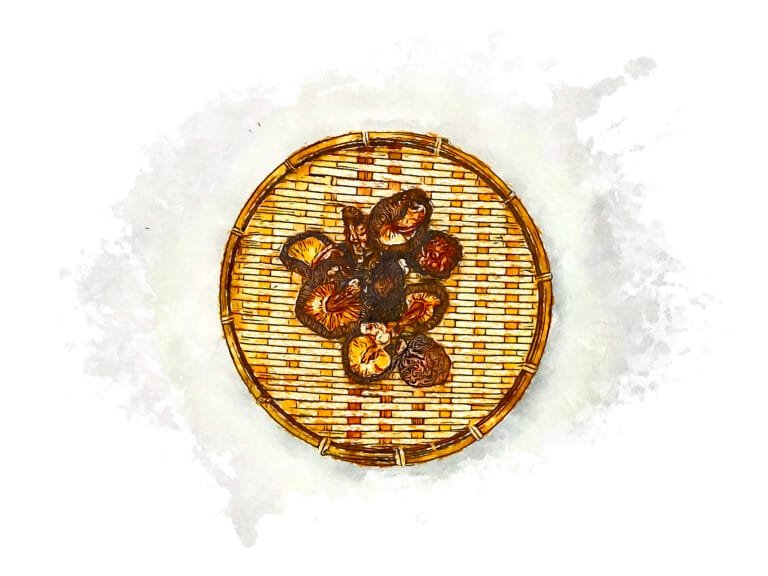
Overhead view of dried shiitake mushrooms arranged on a round bamboo drying basket.

As a chef, I learned that stocks are the literal foundation (from the French word 'fond') of cuisine. Consider this simple, no-cook shiitake dashi recipe the first brick as you lay the foundation for your shojin ryori practice.

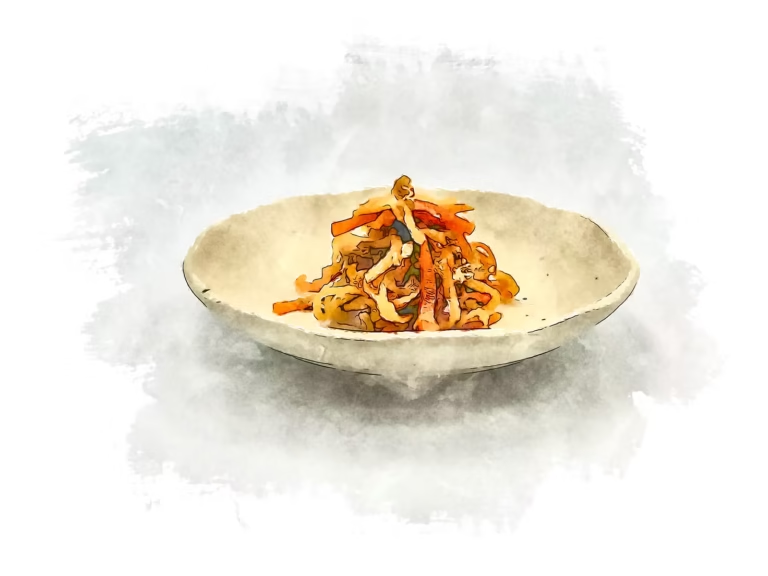
Kinpira Gobo: Spicy Sauteed Burdock Root

A glistening plate of spicy burdock root and carrot (kinpira gobo) sauteed with chili pepper and sesame seed.

Kinpira gobo is named after the son of Kintaro, a Japanese folk hero, from an old puppet theatre genre popular in the early Edo period (1600s), Sakata no Kinpira. Sakata was known for his strength and courage—qualities this dish symbolically imparts to those who eat it, reflecting its remarkable nutritional density

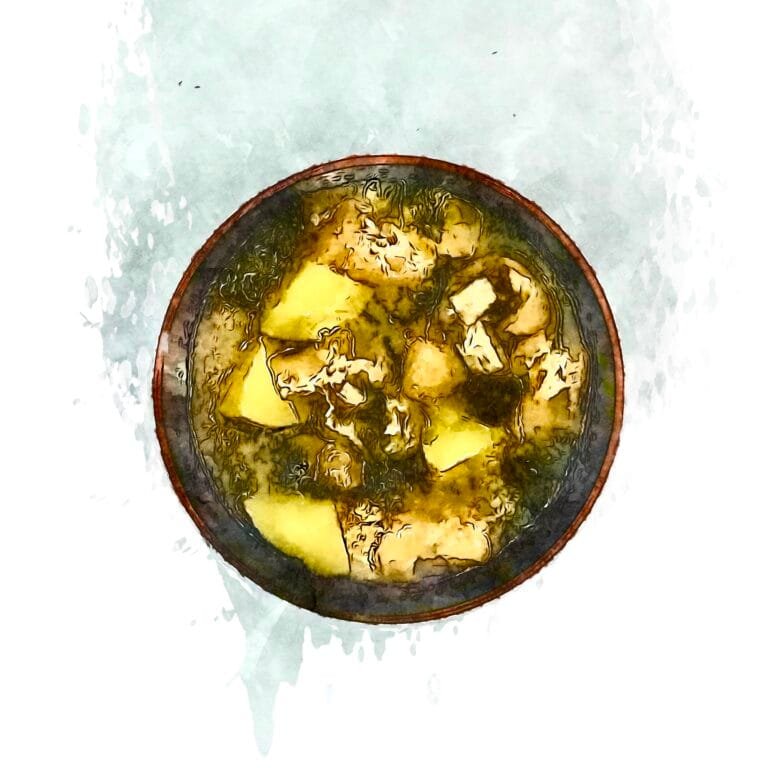
Potato & Nori Miso Soup

A wooden bowl filled with piping hot potato and seaweed miso soup.

This is a quick and easy variation on the ubiquitous tofu and wakame miso soup that I would dare say everyone has experienced. In the very least you have likely seen it. If you do a Google search for miso soup this is the one that invariably comes up, sometimes with sometimes without scallions. This version makes two substitutions and one addition — turning it on its head while maintaining its familiarity by preserving the essence of the original.