
お寺の朝ごはん:おかゆ
This okayu recipe is deceptively simple. Rice porridge stripped to its barest elements: grain, water, heat, time.
Its history in Japan stretches back over 1,200 years. The earliest written record comes from Tōdai-ji Temple in Nara in 752 CE, where monks boiled rice in roasted green tea — a version known as chagayu (tea porridge). The austere version that I am sharing today descends from this monastic tradition, and continues to be the first meal served each morning in Buddhist monasteries across Japan.
By the Heian Period (794–1185), the aristocracy had adopted their own variation: nanakusa-gayu (seven herb rice porridge), eaten as a way to ensure health and longevity. A practice that was eventually adopted by the general population, and is observed to this day every year on January 7th as a way of undoing the ill effects of new year celebrations.
The Ten Benefits of Porridge
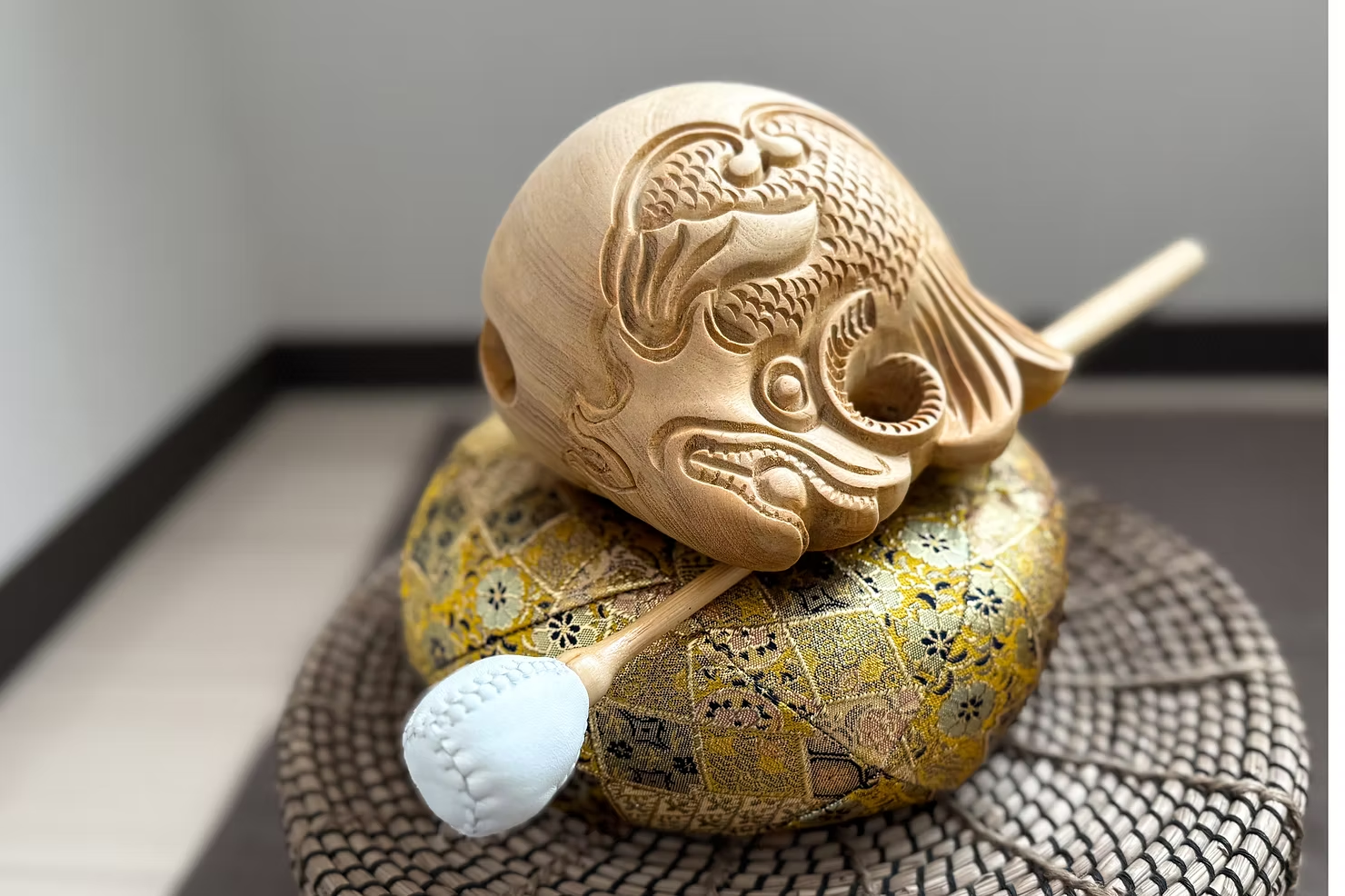
Every morning during my training at the Enryaku-ji Gyōin on Mt. Hiei, we took turns announcing that it was time to eat. We tapped a specific rhythm on the han — a piece of wood or sometimes a fish-shaped piece called a mokugyo — hanging in the corridor just outside the shoku-dō, the food hall. The monks filed in, took their place, and waited until everyone had arrived. The door was closed and another monk clapped two blocks of wood together and began the pre-meal chanting.
One of the chants was the Rice Congee Verse (粥 偈・しゅく げ), detailing the benefits attributed to eating okayu. The ten benefits originate in the Pali Canon, where the Buddha himself endorsed rice porridge as medicine and sustenance. The benefits of eating okayu are …
- improves skin health
- increases vitality
- extends life
- promotes well-being
- enhances eloquent speech
- soothes stomach ailments
- protects against colds
- eliminates hunger
- quenches thirst
- aids digestive health
They are invoked not as nutritional advice but as dharma. A reminder that the simplest food —prepared and received mindfully — is enough.
Porridge Is Practice
Dōgen Zenji’s Tenzo Kyōkun (Instructions for the Cook, 1237) argues that preparing meals is itself buddha-activity. His language about rice is specific: treat the pot as one’s own head, know that the water is one’s own lifeblood, do not waste a single grain. He instructed the tenzo to begin preparing morning porridge after midnight — present-moment awareness includes responsible care for what has not yet arrived.
In a Dharma Hall discourse on Enlightenment Day, Dōgen declared the morning porridge to be “exactly the place where the Tathāgata eats” — collapsing the distance between a monk’s breakfast and Sujata’s offering to the Buddha before his awakening. Three attitudes guide this work: joyful mind (kishin), nurturing mind (rōshin), and magnanimous mind (daishin).
Though they may appear to be a deeply spiritual concept worthy of endless hours of seated contemplation — and without a doubt they can be — Dōgen’s intention was the opposite. The Three Minds are meant to close the gap between meditation and daily existence, transforming mundane activity into practice.
My Okayu Recipe: The Perfect Ratio
Let me start by saying this: there is no right or wrong ratio. I have seen — and eaten — okayu of varying consistencies. All of them shared the same two ingredients: rice and water. The recipe was also the same. Wash the rice, add the washed rice to the rice cooker, cover with water, and cook. What varied was the cook and their intention.
Depending on how much rice is available and how many people you are feeding you may have to use more water and thin out the okayu to ensure that there is enough for everyone. Or perhaps you are cooking for someone who is recovering from an illness, and needs to ease back into eating. The same high water to rice ratio results in a thinner porridge that is more easily digested and absorbed into the body. When we are mindful of the present moment, every choice becomes an expression of compassion.
The water to rice ratio for okayu can go as high as 20:1 and as low as 8:1. When I am preparing breakfast on most days I use a 10:1 ratio. Thick enough to sate my hunger, thin enough to quench my thirst.
One Bowl, Nothing Wasted
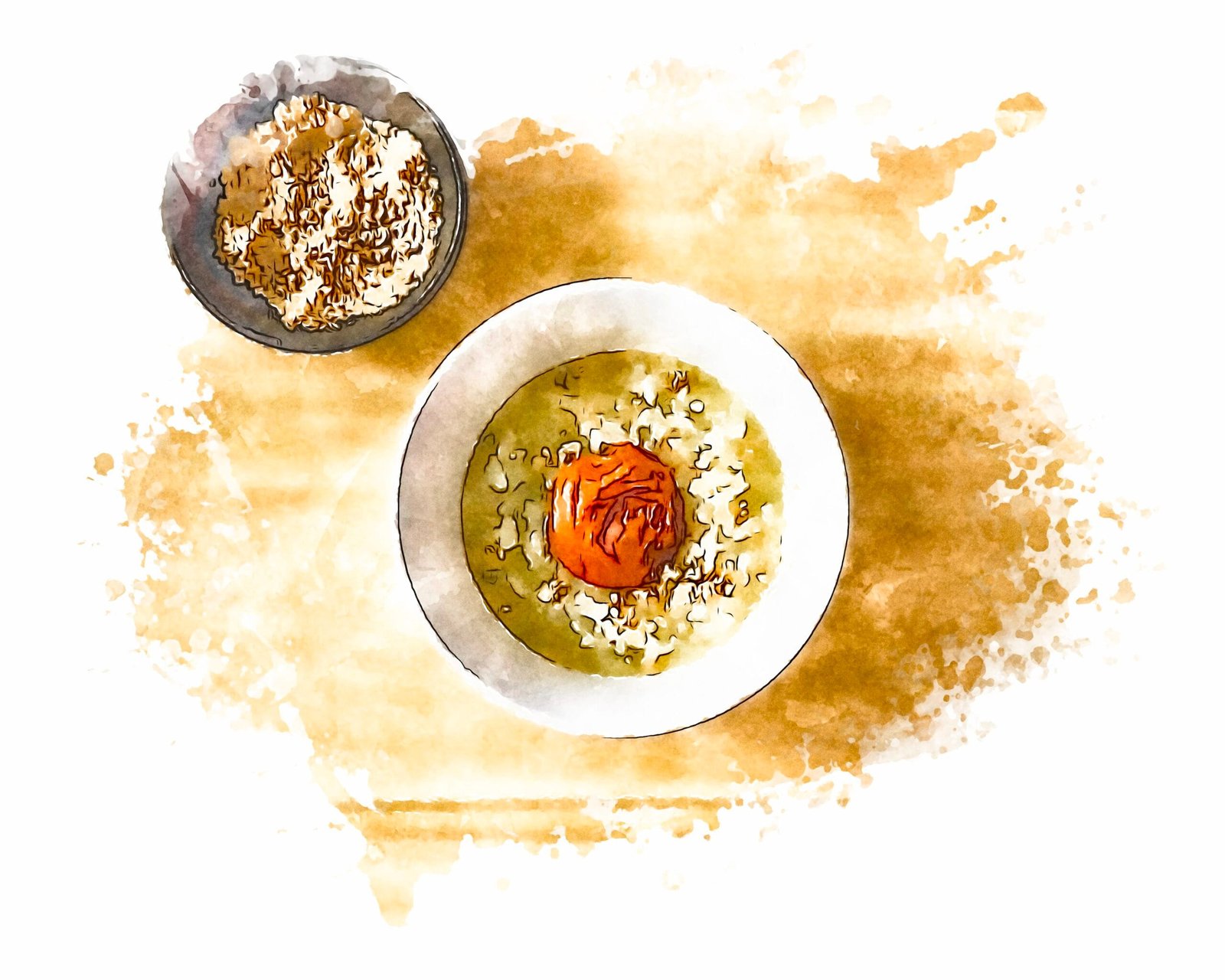
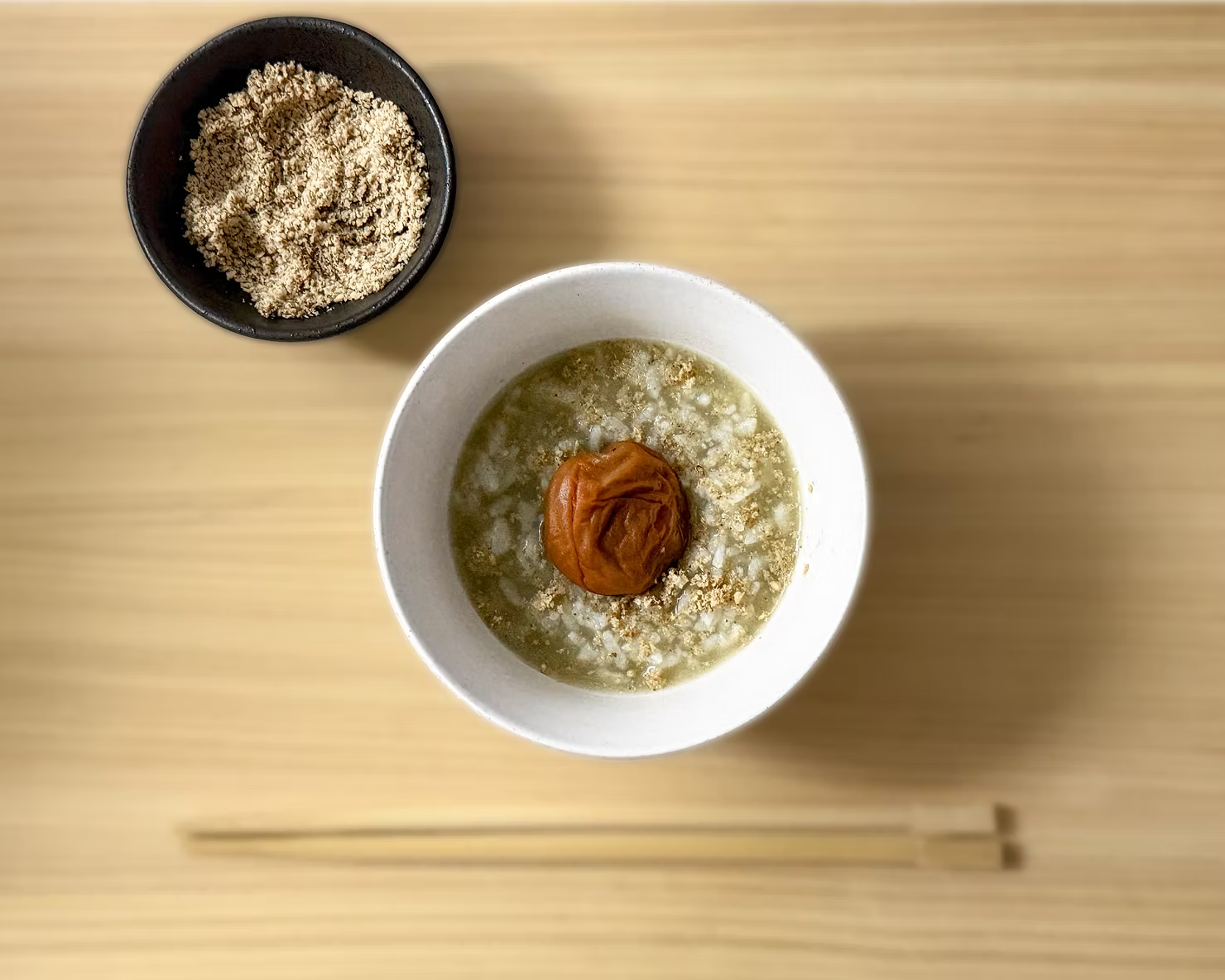
In this recipe I finish the dish with sesame salt (goma-shio) and a single pickled Japanese plum (umeboshi). At the gyōin we would pass the goma-shio from one end of the table to the other as we chanted the Heart Sutra (Hannya Shingyō). Pickles were served on a small plate to the side of our porridge bowl.
Tea was served as well, but not as a beverage per se. We used it along with a slice of pickled daikon that we reserved to clean our plates and bowls. When we were done eating, we poured the warm tea onto the plate and into our bowl, then held the daikon with our chopsticks and wiped our plate. We added the tea and any small bits of food into our bowl and repeated the process. When done, we drank the mix of tea and food from our bowl, then ate the pickled daikon. In light of the ten benefits and Dōgen’s instructions, losing even a single grain would be mottainai: a waste of potential. Not just of food, but of an opportunity to practice.
OKAYU: A MONK’S BREAKFAST
Ingredients
Okayu (Rice Porridge)
Goma Shio (Sesame Salt)
Instructions
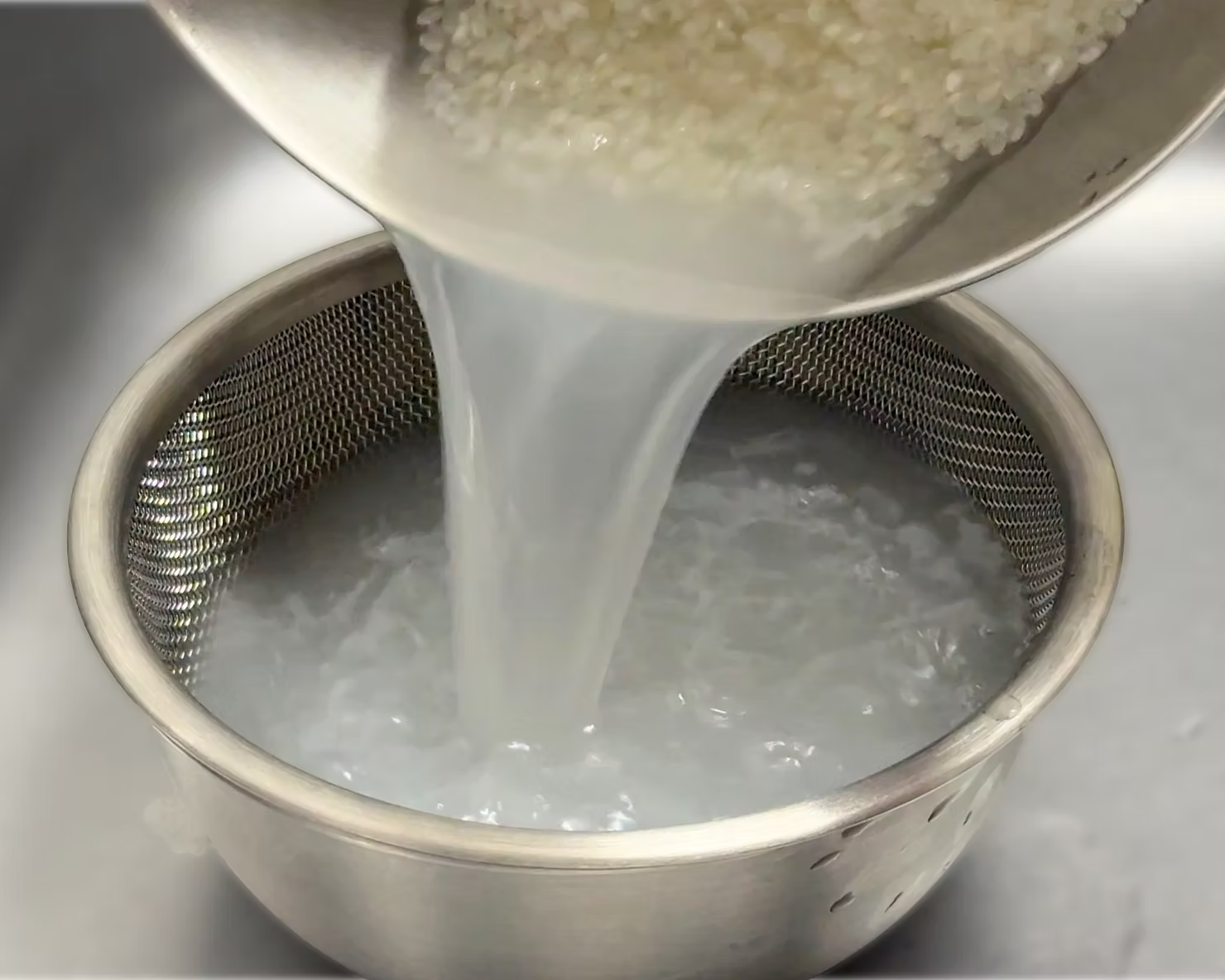
- WASHING THE RICE. Put the rice into a bowl and cover it with water. Use the palm of your hand to gently polish the grains. Set a strainer over a second bowl and pour off the water; you can save the water for cooking vegetables or using in place of stock in other recipes. Repeat this 3-4 times or until the water runs clear.
- COOKING THE OKAYU. Place the rice cooker insert onto a scale and add the washed rice. Tare the scale and pour in the water. If you want to make more than the amount specified in this recipe, just wash the desired amount of rice and cover with 10x its weight in water. Place the insert into the rice cooker and let the rice soak for 30 minutes. Select the okayu setting on the rice cooker and press start. While the okayu is cooking, prepare the goma shio (sesame salt).
- MAKING GOMA SHIO. Toast the sesame seeds in a pan set over low heat until fragrant and golden. Transfer the toasted seeds to a mortar and pestle. Add the salt and grind until the texture resembles sand. Sesame seeds are highly nutritious, but indigestible when eaten whole. The grinding solves this. It is best to make this fresh every time for the best flavor and nutrition. It also helps avoid rancidity; the sesame seeds have a high oil content which makes them susceptible to oxidation.
- SERVING. When the okayu has finished cooking, open the lid of the rice cooker slowly. Be careful as you open the lid. A lot of steam will be released, and it is easy to get a steam burn. Give the rice a gentle stir, and divide it equally into serving bowls. Serve with goma shio and a few tsukemono (Japanese pickles) such as umeboshi and daikon radish on the side.
Note
MAKING OKAYU WITH COOKED RICE. You might not always have the time to wash, soak, and cook okayu from scratch. Life happens. Part of being mindful is about recognizing the real constraints at any given moment. Time is often the most common in day-to-day life. If that is the case just add some left over cooked rice to a pot and cover it with two times the amount of rice (by weight) with water or tea. Bring it to a boil, then reduce it to a simmer. Cook for 5-10 minutes, stirring occasionally to prevent it from sticking. Add water as needed to adjust the consistency.