
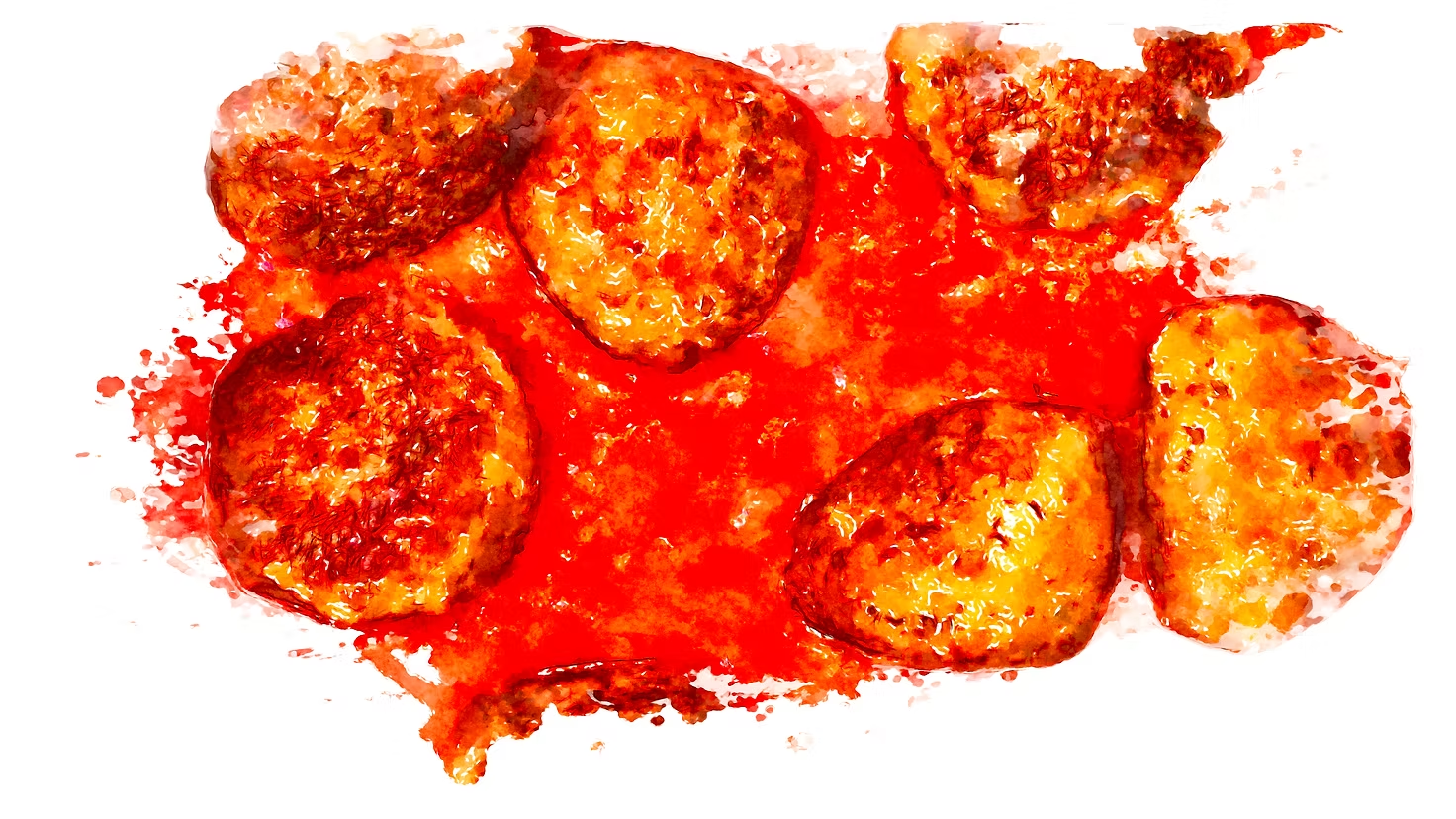

【イタリアン精進レシピ】肉を使わない”ミートボール”の煮込み
Don’t tell my nonna, but I’ve been messing with her meatball recipe.
For years, I made traditional polpette—first in my family’s kitchen, then professionally at Hearth and Insieme Restaurants in Manhattan under Marco Canora, who had learned his technique from Fabio Picci at Cibreo in Florence. Those meatballs were legendary: fall-apart tender, deeply savory, at once familiar, yet strikingly different.
The challenge was recreating that same texture and depth of flavor without any animal products. Not “pretty good for plant-based.” Actually good. The kind that makes you forget there’s no meat involved. Or the copious amounts of cheese that played no small part in the other-worldly texture of those meatballs.
This is the third recipe in my Italian shōjin ryōri series—taking the Japanese Buddhist culinary principles seasonality, harmony with the environment, and no-waste and applying them to Italian cuisine. I hope to demonstrate that these techniques are universal principles that are at work in most cultures and cuisines, not just Japanese. You just have to cultivate presence and awareness in the kitchen to see this.
What makes these plant-based meatballs different?
Most meatless meatballs fail in one of two ways: they’re either dense and rubbery, or they fall apart for the wrong reasons—crumbling instead of that luxurious, melt-in-your-mouth tenderness you want.
The texture secret came from an unexpected place: tenkasu (Japanese tempura scraps) soaked in tomato juice. It creates the exact yielding, tender structure I remembered from my nonna’s kitchen and perfected at Hearth. These meatballs have that same fall-apart quality—perfect orbs that melt in your mouth.
The flavor challenge was harder. Traditional meatballs get their depth from the Maillard reaction when you sear meat in a hot pan—that browning creates hundreds of flavor compounds you can’t fake. My solution? Ground soy protein browned properly, patience while building the sauce, and the same garlic and oregano my nonna always used. The result delivers the same savory complexity.
This recipe is a hybrid: my nonna’s approach to seasoning and her insistence on braising low and slow, combined with Marco’s textural technique (though he’d be confused by my ingredient substitutions), and the shōjin ryōri principle of using every element purposefully. Nothing wasted, every ingredient working toward the whole.
The tomato sauce they braise in becomes the second act—you’ll use it later in the week for spaghetti and meatballs, or over polenta, or stirred into white beans. That’s the Italian home cooking way: cook once, eat multiple times, and use time to your advantage, allowing flavors to naturally blend with time.
These aren’t “good for plant-based.” They’re just good. The kind that would make my nonna stop talking to me if she knew, but secretly go back for seconds.
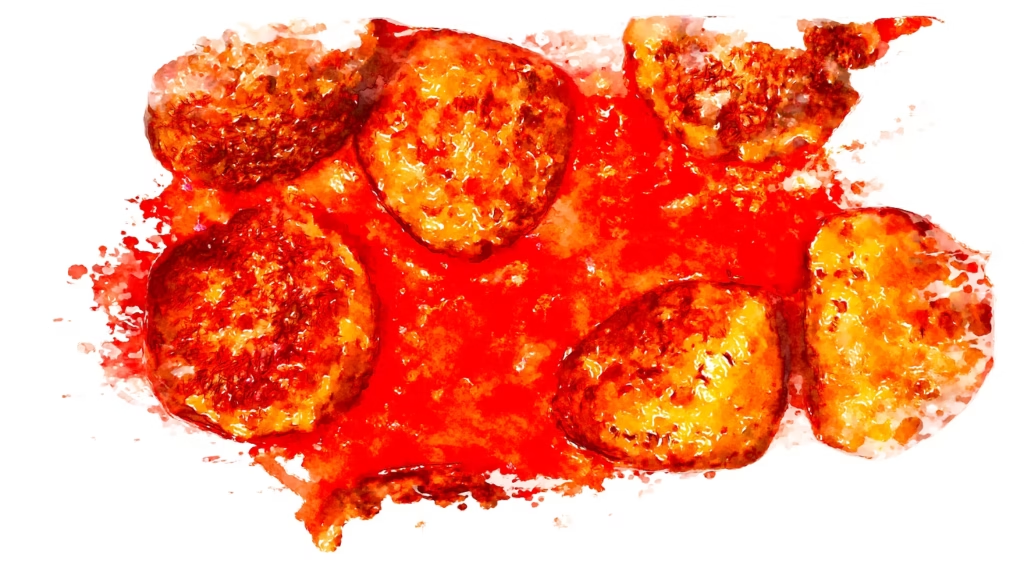
ITALIAN SHŌJIN SERIES: POLPETTE SENZA CARNE IN SUGO
INGREDIENTS:
To Make the Meatballs
To Braise the Meatballs
INSTRUCTIONS:
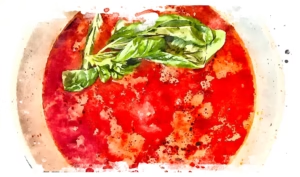
PREPARE THE SUGO DI POMODORO. This is the sauce that we are going to braise the meatballs in once they have been fried. Here is a link to the SUGO RECIPE. It can be made a day or two in advance if you don’t want to cook the meatballs right away.
- REHYDRATING THE PROTEIN. Boil 1,000 grams of water. Place the ground soy protein in a heat-proof bowl and pour over the water. Rehydrate for 10-15 minutes. Strain off the water and allow to cool. When cool enough to handle, gently squeeze with your hands to remove any remaining water. Set aside.
- MAKING THE MIXTURE. Combine the tenkasu with the water and tomato juice. Set aside for 10 minutes to soften completely. This will help bind the mixture. While that is softening place the rehydrated protein into a large bowl and season with dried oregano and sea salt. Once the tenkasu is soft, add it to the bowl and mix well. Next add the rice flour, potato starch, and a few grinds of cracked black pepper (if using). Mix well.
- SHAPING THE MEATBALLS. Tare a scale and work a small amount of the mixture in your hands (wet your hands slightly with water to prevent sticking) and form it into a small ball. Check the weight of the ball. You want it to weigh 30 grams. Adjust the weight as needed, then roll the ball between the palms of your hands to smooth the surface. Set aside on a clean plate or tray and repeat with the remaining mixture. You should have 8 balls when you are done.
- FRYING THE MEATBALLS. Set a pan over medium heat and add the oil. When the oil is hot, carefully add the meatballs one-by-one. As the meatballs are cooking, use chopsticks (or a spoon) to turn them so that they brown evenly on all sides. As the meatballs are ready, remove them from the pan and set them aside while the remaining meatballs finish cooking.
- BRAISING THE MEATBALLS. Set the pot of tomato sauce over medium heat to get hot. Once it is starting to bubble, add in the meatballs. When all of the meatballs have been added to the sauce, give the pan a swirl to help submerge them in the sauce. Bring the pot to a simmer and braise the meatballs for 1 hour. The meatballs can be eaten immediately with some grated cheese and a drizzle of olive oil, or they can be cooled down and stored in the refrigerator for up to 3-4 days.
Note
STORAGE. This recipe will keep in the refrigerator for 3-4 days. Cooling them and storing them for a day or two allows the flavors to meld together, so it is actually preferential, though they are delicious straight out of the sauce the day you make them. I like to eat some day of, and save the rest to enjoy later in the week with some spaghetti (Spaghetti con le Polpette).
Hi Eiten, this is by far the best meatballs recipe I have tried, thank you so much! It’s a bit of effort, because I have to make the tenkasu first, but well worth it. Yesterday I made a double batch of tenkasu; half went into meatballs that I served with Swedish meatballs style on mash (amazing), and the rest will be for dinner with your Nonna’s sauce tomorrow. I can’t wait x
Ulrike-san,
Thank you for sharing this. Making the tenkasu yourself adds a step, without a doubt, but a double batch is a smart way to extend the benefits of the extra effort. Swedish-style on mash is something I hadn’t thought of. I will have to try that myself.
In shōjin ryōri there’s the idea of shindo fuji, “body and land are not two.” In a purely culinary sense, one way to understand this is that a dish belongs to the place and the table where it’s cooked. Bringing the recipe into your own kitchen and traditions is exactly how I hope it gets used.
Let me know how the two versions compare after you try the version with Nonna’s tomato sauce.
Eiten
Good morning Oshō-san
Thank you for your reply!
I have made the version with your Nonna’s tomato sauce twice before. I love it for its simplicity – I tend overdo things in my cooking: lots of ingredients, and in the end its usually quite nice, but with too many flavours competing. The experience of eating the simple, humble sauce, is truly very special. I’m afraid I’m going to keep loading my dishes with all the ingredients, but it’s nice that I have this recipe to return to every now and again.
Thank you for your website and newsletter; I really enjoy reading your pieces.
Best regards
Ulrike
Ulrike-san, good morning.
It is hard to fight the urge to add just a pinch of something as we are cooking. As a young chef, learning the craft, I was certainly guilty as charged! Over time I started to ask myself a question that fundamentally changed that, “How can I bring out the essence of this ingredient?” It became less about creating, and more about uncovering. Not unlike meditation when you think about it. Nothing extra is necessary, no enlightenment to achieve. It is inherently already there to begin with. That underlies all of the cooking on the website and Youtube channel: everything already is in place, I just have to do the minimal work necessary so that it can be seen (and tasted) clearly. I think my Nonna was onto something with this sauce.
Gasshō
Eiten