
みょうがと大葉混ぜご飯
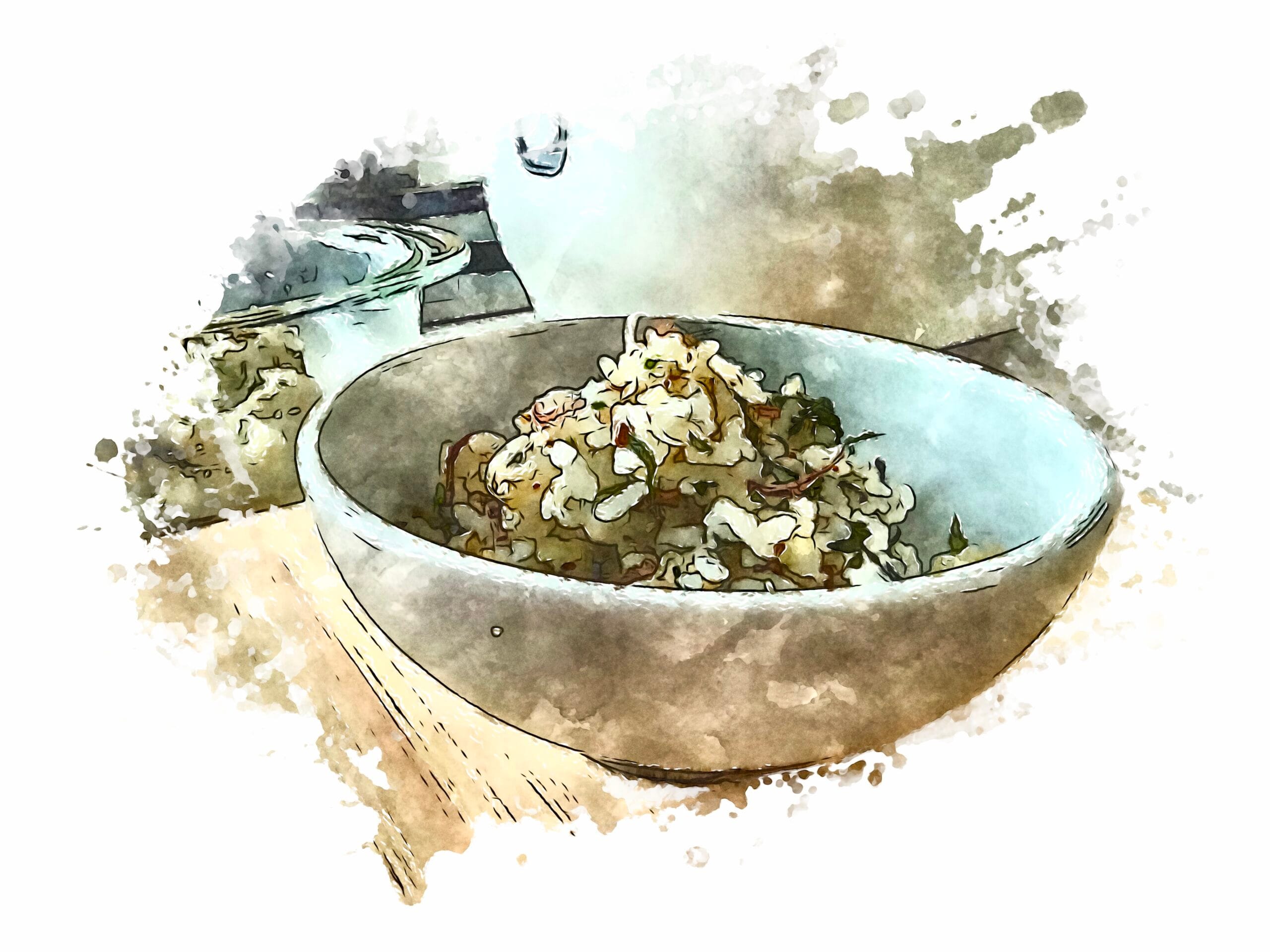
Mazegohan (混ぜご飯・mixed rice) is a classic Japanese dish made by mixing any number of ingredients into steamed rice. This recipe is for a version of mazegohan mixed with myoga (みょうが・Japanese ginger), shiso (大葉・perilla leaf), and toasted ground sesame seed.
The inspiration for this recipe is a dish that was often served in the shokudo (食堂・food hall) at Enryaku-ji Gyo-in where I lived for two months while training in Taimitsu (台密・Tendai Esoteric Buddhism).
We ate twice a day. The morning meal was always a bowl of okayu (お粥・rice porridge), some pickles, and sesame salt. Our noon meal strictly adhered to the ichijyu-issai (一汁一菜・one soup, one dish), but the components of the meal varied. One of my favorites was carrot-ginger rice with slices of earthy shiitake mushrooms in it. That is the one that this variation is loosely based upon.
What are myoga and shiso?
Myoga is often referred to as Japanese ginger, and belongs to the same family (Zingiberaceae) as the common ginger that is available in most supermarkets around the world. Myoga — and shiso as well — however, are not as widely available and may be difficult to find outside of major urban areas with a large, established Japanese population.
Shiso is the Japanese name for perilla leaf, a highly fragrant and aromatic herb belonging to the mint family (Lamiaceae). I find the taste to be like a cross between mint and basil. Which is a good thing since I mentioned that it is also fairly difficult to come by.
Cooking as Practice
So why am I sharing a recipe if the two main ingredients are hard to come by? Because that is no reason not to make it. Seasons come and go, as do ingredients along with them. You can meditate just as well in silence, seated on a cushion, in a quiet place as you can by closing your eyes seated right where you are now and starting to follow your breath as you inhale and exhale. The practice is not dependent upon circumstances, it is adapted to circumstances. So too is cooking.
Myoga is a member of the ginger family, so you can substitute ginger. The flavor of ginger is stronger though, so the first time you make it reduce the quantity and see how it tastes. Shiso, as I said, is a member of the mint family that to me has notes of basil in its flavor profile. Replace the shiso with basil or mint and it will be equally fragrant and delicious.
I live in Hokkaido, Japan. Myoga is in the local markets, and shiso happens to be growing in the raised planter bed in my backyard. That is why I cook with it. It is available to me in the current season (旬・shun). Myoga at its beginning (走り・hashiri), and shiso at its end (名残・nagori).
Let the season speak. Listen. Look around you. What season is it? What is growing? Once you can answer those questions you are ready. Step into the kitchen and start to cook.
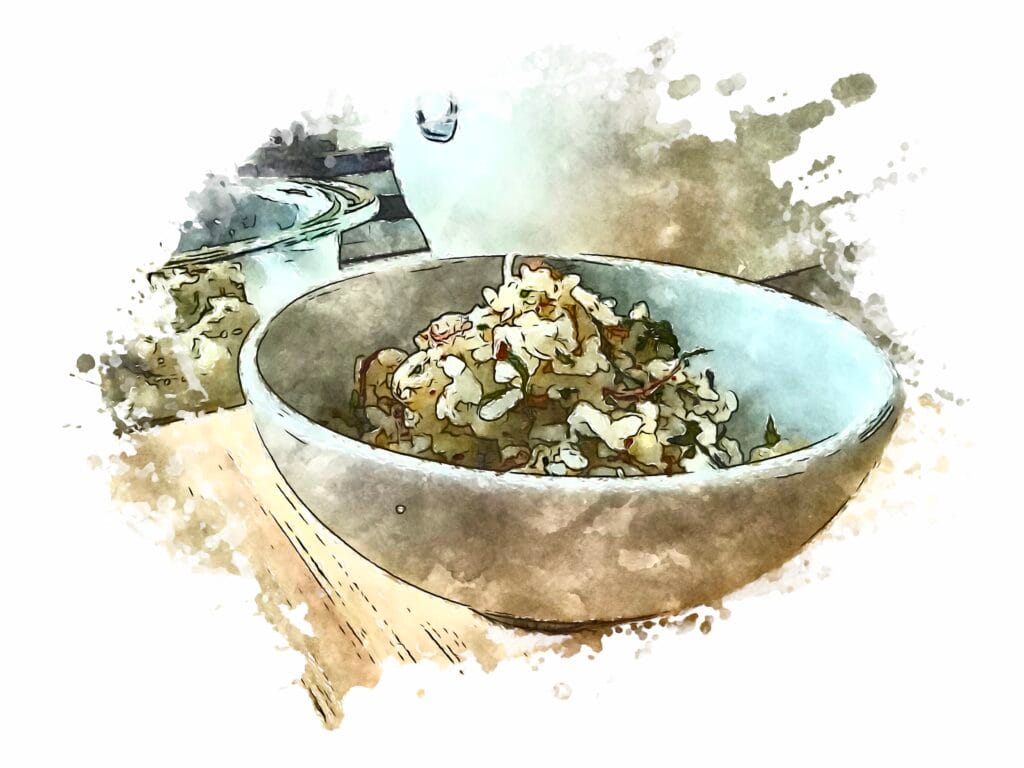
JAPANESE GINGER RICE WITH SHISO
Ingredients
Instructions
COOK THE RICE. Rinse the raw short-grain rice until the water runs clear. Cook using your preferred method. If you aren’t sure how to cook rice, watch How to Cook Perfect Steamed Japanese Rice.
PREPARE THE MYOGA. Slice the myoga (1 bulb) in half lengthwise, then slice very thinly into half-moons. Soak the slices in a small bowl of cold water for 2 minutes to remove excess bitterness, then drain and dry thoroughly with paper towels.
PREPARE THE SHISO. Stack the perilla (3 leaves) on top of each other, roll them tightly into a small cylinder, and slice across to create delicate, thin ribbons (chiffonade). Gently pat dry if there is any moisture.
GRIND THE SESAME. Toast the sesame seeds over medium-low heat until golden and fragrant. Turn off the heat just before you think they are ready and allow the residual heat in the pan to finish the cooking. Transfer the seeds to a mortar and pestle and grind until they resemble grains of sand.
SEASON THE RICE. Transfer the hot cooked rice to a wide mixing bowl. Sprinkle the sea salt (1.5g) and the optional soy sauce (1.5ml) evenly over the surface. Use a wet wooden rice paddle (shamoji) to slice through the rice on an angle, distributing the seasoning without mashing the grains.
FINISHING & SERVING. Add the prepared myoga, shiso, and toasted white sesame seeds (4.5g). Lightly bruise the sesame seeds between your fingertips as you sprinkle them in to release their essential oils. Gently fold the ingredients into the rice using a cutting and flipping motion. Serve immediately while warm and highly aromatic.
Note
SUBSTITUTIONS. Myoga and shiso are difficult to find in most areas outside of Japan. That is no reason not to make this recipe. You can substitute ginger for the myoga, though you will want to adjust the amount to taste: the flavor and aroma are much more pungent. For the shiso, you can substitute several other herbs. Two immediate suggestions are cilantro or mint.