
舞茸の炊き込みごはん
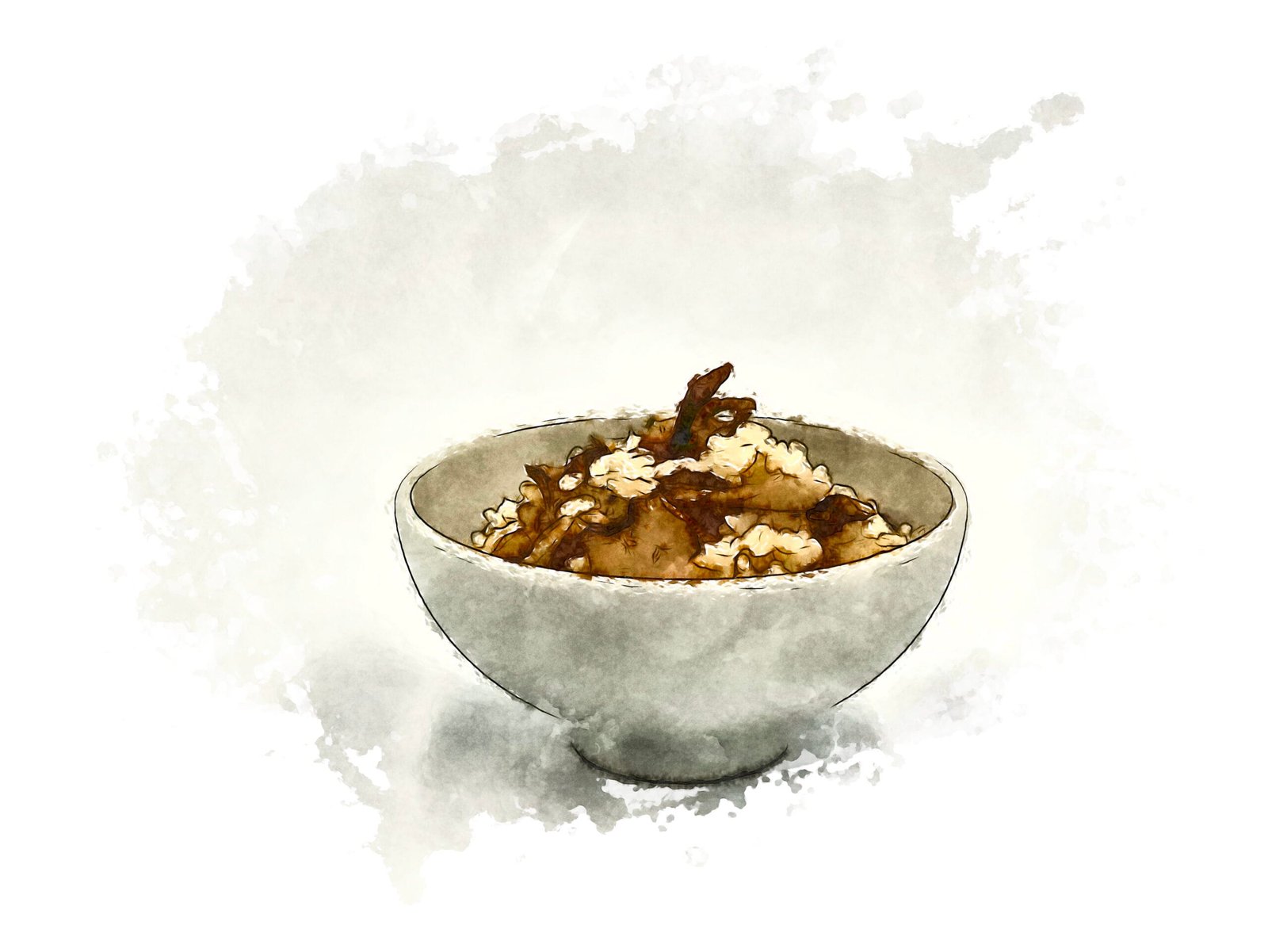
Mushrooms such as maitake mushrooms are second only to pumpkins in the collective imagination when it comes to the Autumn season. In Japan there are numerous dishes that capture their essence, but perhaps none better than kinoko-no-takikomi-gohan (mushroom rice).
Seasonal cooking (旬・Shun) is one of the three core principles of shojin ryori, and one of the themes that I come back to again and again. I also like to be conscientious of the day-to-day reality for most of us: resources, in particular time and money, are not unlimited.
Budgetary concerns are actually the reason that takikomigohan came about in the first place. The dish first appeared sometime during the Nara period (710-794 CE). At that time rice was scarce. As a result, the people needed to find a way to stretch it and make it last. They began adding other grains and hearty root vegetables that would increase the volume and nutritional value, while conserving their limited supply of polished rice.
Matsutake mushrooms are typically the base of this classic dish, but they are often out of reach for most people given their high price tag. Substitute maitake mushrooms (or any other ones that you like) to make this dish agreeable to even the tightest of budgets.
This dish is a wonderful addition to any Fall dinner, not only for its seasonality, but also for the opportunity it provides to practice mindfulness and gratitude for what we have.
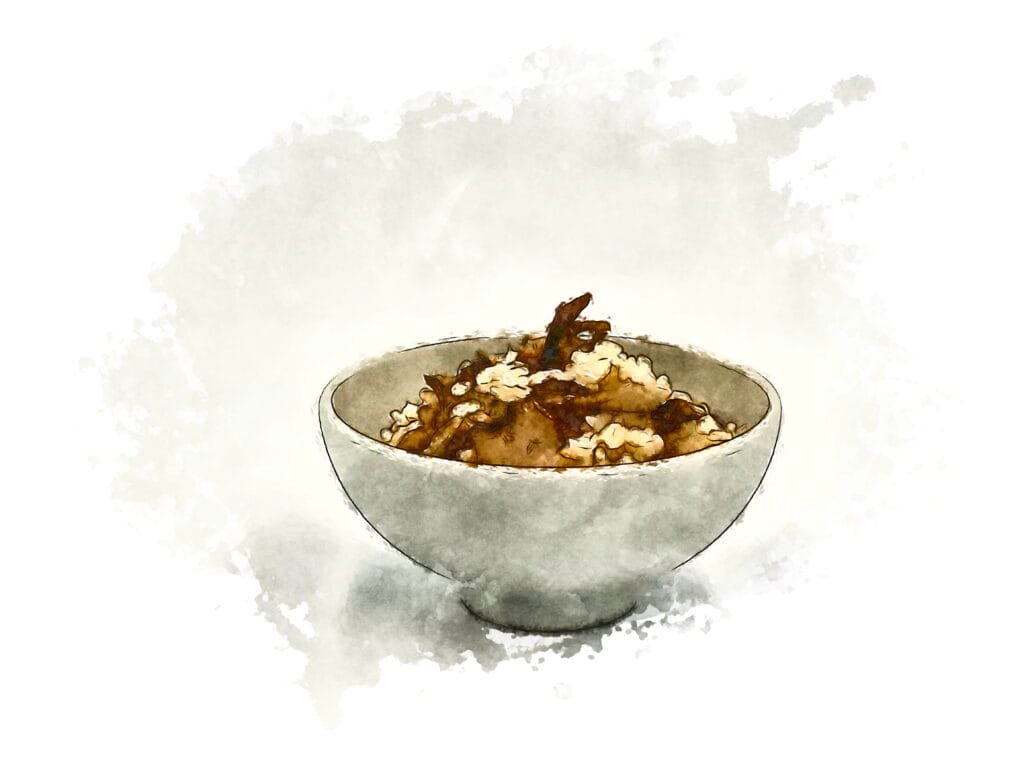
MAITAKE MUSHROOM RICE
INGREDIENTS:
INSTRUCTIONS:
- Washing the rice. Rinse the rice 4-5 times to remove any residue that remains from the rice polishing process, changing the water with each rinsing. The flavor is enhanced by doing this, but if you are okay with it and don’t want to waste the water, you can skip this step altogether. I sometimes do, and I don’t feel that there is a disagreeable or noticeable difference in flavor or aroma.
- Seasoning the rice. Once the rice has been rinsed add all of the remaining ingredients except for the mushrooms. Allow the rice to soak for an hour. This rehydration results in more even cooking and texture of the grains.
- Preparing the mushrooms. Slice or tear the mushrooms by hand into approximately 1″ pieces. If you are using a variety other than maitake, cut them appropriately based upon the size and shape of the mushroom. Add them to a wide frying pan so that they are spread in a shallow even layer and cook over medium heat to cook off excess water. This allows the flavor to concentrate, while eliminating the water naturally contained in the mushrooms from causing the rice to become soggy when they are added. There is no need for any oil; the water will be released from the mushrooms and initially steam them, so they will not stick. Adjust the heat if necessary to prevent them from burning as the water evaporates.
- Cooking the rice. Set the rice into a rice cooker and cook for thirty minutes. This is the quick mode on my Japanese rice cooker. Yours may be different, so follow the instructions for the model that you have. If you don’t have a rice cooker, check out my recipe and video for Mugi Gohan for a demonstration of how to prepare rice on the stovetop. Ten minutes before the rice is finished cooking, add the cooked mushrooms and use a spatula to gently fold them into the rice. Continue cooking the rice until done.
- Remove the rice from the cooker (or stovetop if cooking by that method), and give the rice one last gentle stir before serving.
Note
SUBSTITUTIONS. You can substitute any mushrooms for the maitake in this recipe. Adjust the cooking time when preparing them according to the variety that you choose. Some mushrooms – such as lobster mushrooms – may require the addition of liquid during the initial cooking phase to help tenderize them and make the texture palatable.