
羽根つき餃子
Hanetsuki gyoza is perhaps one of the most widely recognized Japanese foods in the world. But few know that before becoming a popular staple in ramen shops across the globe, gyoza were the literal embodiment of the famous saying often dubiously attributed to Hippocrates: “Let food be thy medicine and medicine be thy food.”
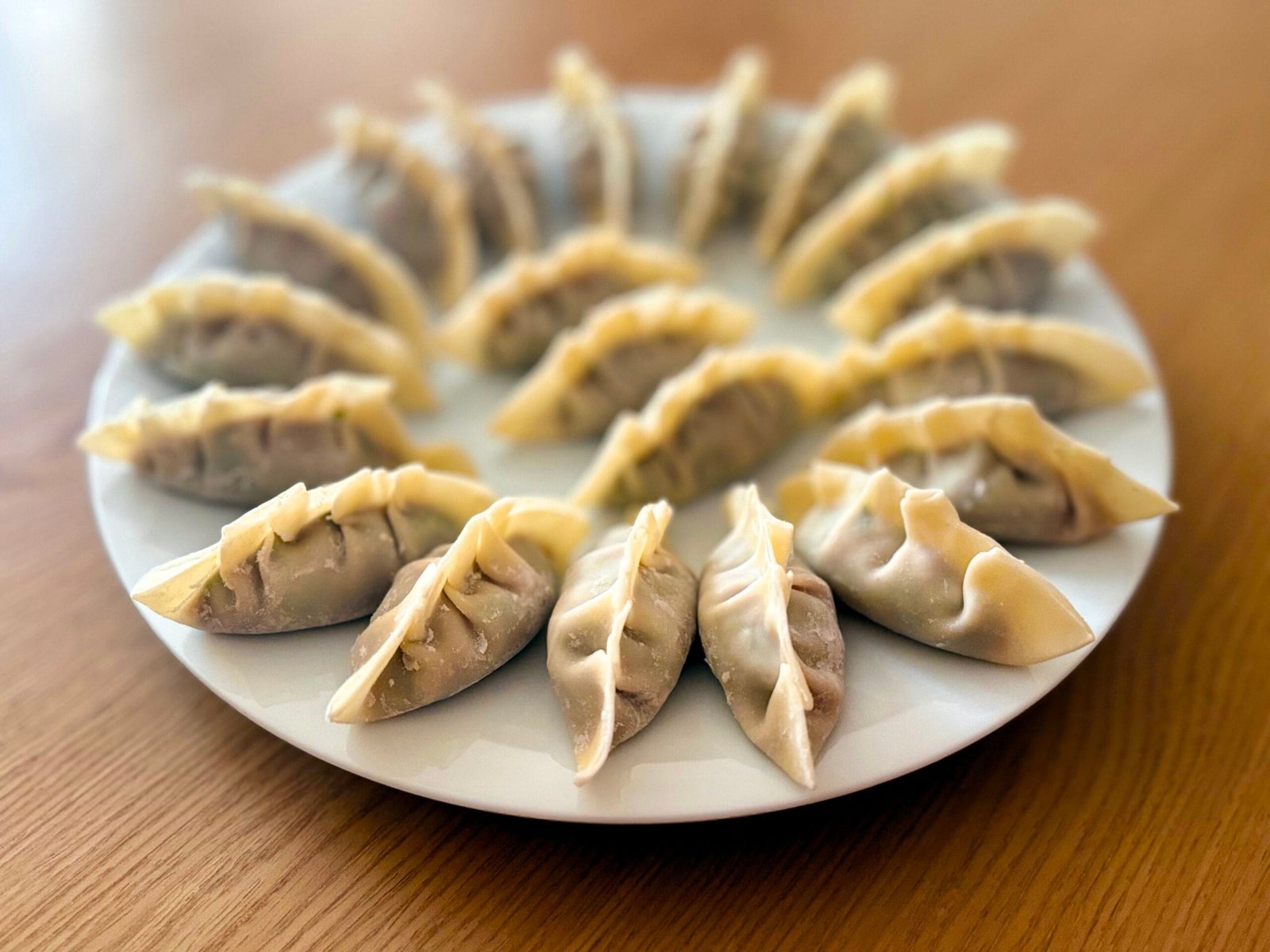
From Medicine to Prosperity
The dumpling we know today began as medicine. During China’s Eastern Han era, nearly two thousand years ago, a physician named Zhang Zhongjing wrapped lamb and warming herbs in small pieces of dough and boiled them in broth — a remedy for patients suffering from frostbitten ears in the depths of winter. The shape of those early dumplings, called jiǎozi (角子)— “tender ears” — mirrored the very ailment they were meant to heal. Food as care. Nourishment as intervention. This is not a new idea.
Over centuries, the dumpling evolved across dynasties — from jiǎozi to biǎn shí (扁食) — gaining cultural weight as their symbolism evolved along the way as well. Their crescent shape came to resemble the gold ingots used as currency, and eating them became an act of welcoming prosperity, particularly during the New Year. Archaeologists have even recovered intact dumplings from Tang dynasty tombs in Turpan, their pleated edges still recognizable after more than a thousand years underground. Some foods endure not because they are extraordinary, but because they are essential.
How Gyoza Became Japanese
Japan’s encounter with the dumpling came gradually. The earliest written reference appears in an Edo-period cookbook from 1778, though the dish remained firmly associated with Chinese cuisine and saw little adoption among the broader population. It was not until after the Second World War that gyoza became Japanese in any meaningful sense. Millions of soldiers and settlers returning from Manchuria brought the taste home with them, and in a country facing scarcity, cooks adapted. Meat was limited, so cabbage and ginger took on greater proportion. Wrappers became thinner. And where boiled dumplings had been the standard in China, Japanese cooks turned to the iron skillet — pan-frying the bottoms to a crisp, then steaming the tops with a splash of water. Yaki gyōza was born not from abundance, but from constraint.
Why Shojin Gyoza
That origin resonates with how I cook and why I started both my YouTube channel and this website.
As a Buddhist monk and a professional chef, I draw on two distinct disciplines — the philosophical framework of my monastic training at Enryaku-ji on Mt. Hiei, and the technical foundation of years in professional kitchens. Shojin ryori sits at the intersection: a practice of preparing food with awareness, economy, and respect for life. In that tradition, constraint is not an obstacle — it is the condition that sharpens attention. When you remove animal products and work within the rhythm of what the season provides, every ingredient earns its place. Nothing is filler.
This gyoza recipe follows that principle. The filling is built on plant-based protein, seasoned simply, and bound with the same techniques you would use for any well-made dumpling. The cabbage is salted and pressed dry so that it contributes texture without waterlogging the skin. Ginger and garlic carry the aromatic weight. In the strictest monastic observance, these would be excluded — the gokun, or five pungent roots, are traditionally avoided in temple kitchens as they are believed to agitate the mind and hinder meditation. But this kitchen serves a broader community, not a monastery. The purpose here is to make a plant-based practice accessible and satisfying, not to enforce prohibitions that would narrow the path before most people have had a chance to walk it.
The Technique for Hanetsuki Gyoza
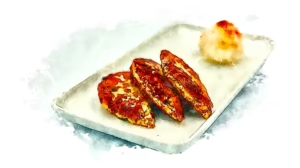
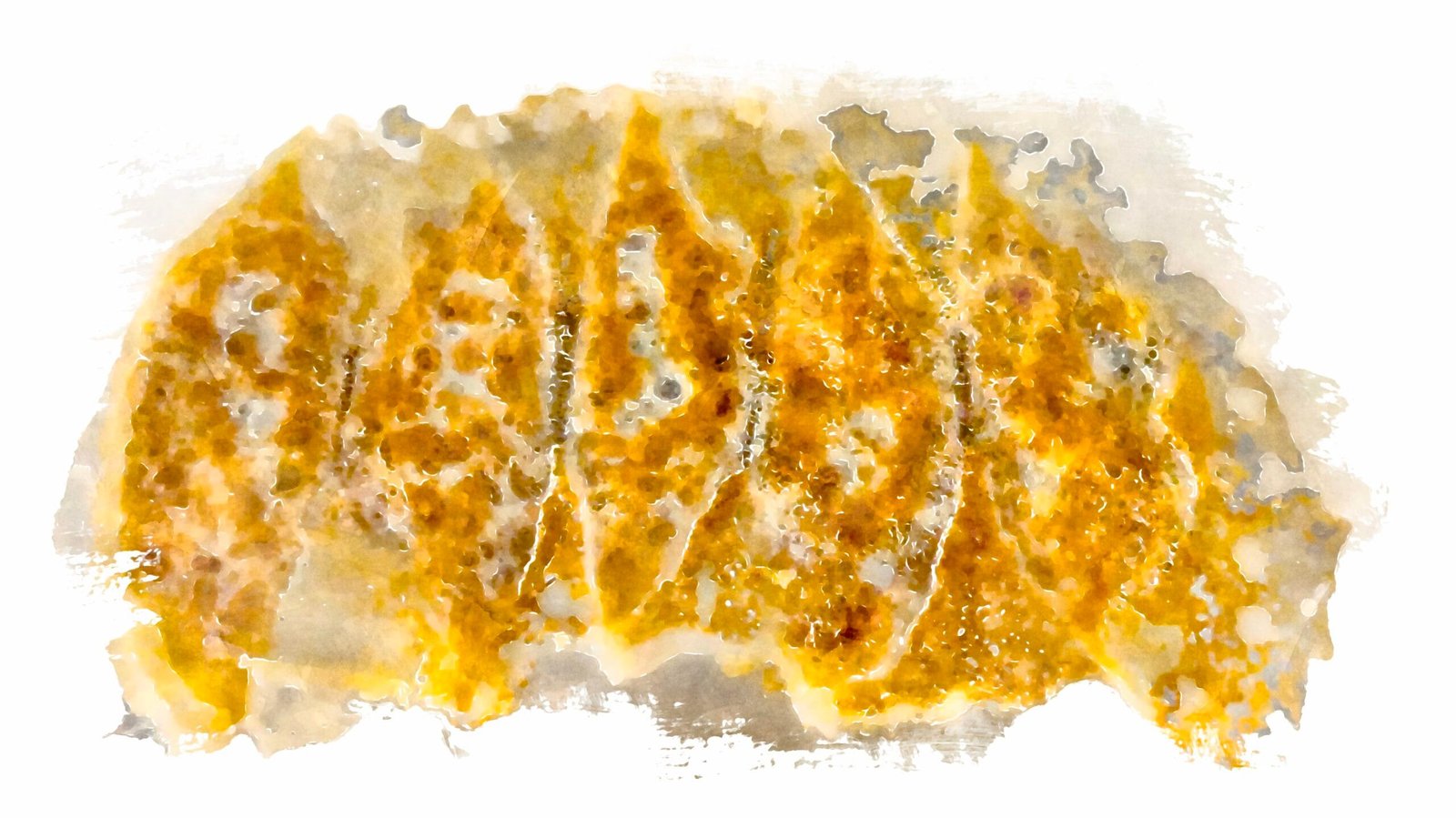
What makes this preparation worth your attention is the method. The batter — a thick cooked slurry of potato starch and water poured into the pan after the initial sear — slowly creates the lacework of crisp, translucent wings that connect each dumpling to the next as the water evaporates and the starch fries. It is one of those rare moments in cooking where patience and carefully regulated heat do the work for you. The result is something you cannot rush or fake. Be present, attentive. See the water evaporate. Hear the change in sound as it transitions from steam to sizzle. That transition is where the wings set, and it asks the same thing of you that any good practice does — presence. Mindfulness.
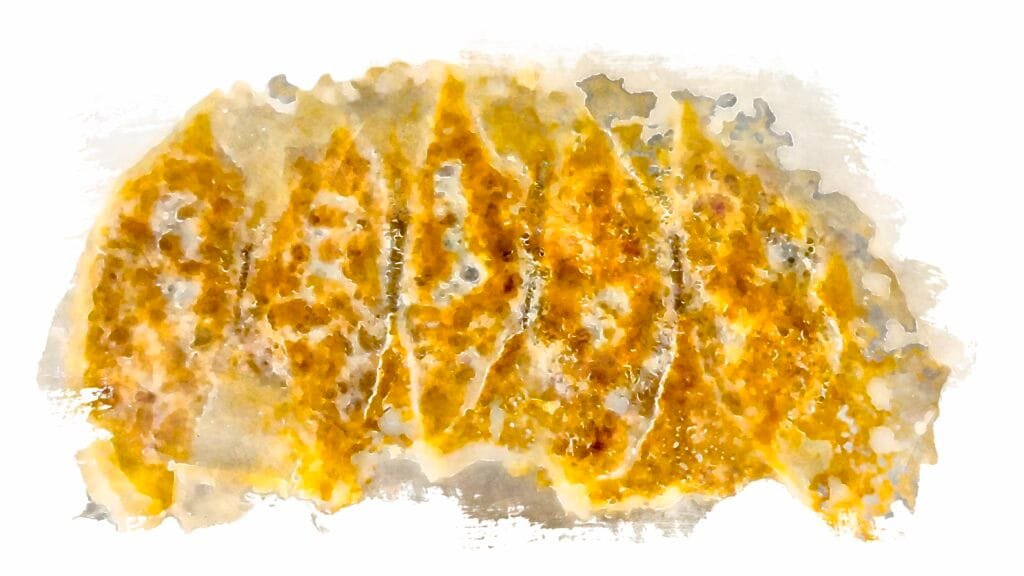
PLANT-BASED GYOZA WITH CRISPY WINGS
INGREDIENTS:
Filling
Gyoza
Batter
INSTRUCTIONS:
- REHYDRATE THE SOY MEAT. Cover the ground soy meat with cold water and bring it to a boil. Cook for 3-5 minutes, strain off the water, and add in 1-2 tablespoons of potato starch. Mix well with a spatula, stirring vigorously until it appears sticky. This helps the filling stay together and gives it a meaty texture when cooked. Set it aside while you prepare the rest of the ingredients for the filling.
- MAKE THE FILLING. Wash the cabbage well and dry it, then thinly slice the leaves (about 1/4″ thick). Transfer it to a strainer set over a bowl and add about 3 grams of salt. Mix it by hand and leave it for 10 minutes. This will draw off excess moisture and concentrate the flavor of the cabbage. After 10 minutes have passed, squeeze it dry with your hands and set it aside.
- PREPARE THE TUILE BATTER. Whisk the potato starch, sake, and rice oil together in a bowl. Continue whisking and slowly stream in the warm water. When a thick, clear gel has formed, strain the batter into a clean container with a lid. You will only need half of the batter for this recipe, and can store the remaining batter covered in the refrigerator for up to one week.
- COOKING THE GYOZA. Heat a small amount of rice oil in a large pan set over med-high heat. Arrange half of the gyoza in two rows of five gyoza each. Nestle the gyoza in each row tightly together; this will make them easier to handle later when plating them. Whisk a quarter of the batter together with an equal weight of water. Once the gyoza are browned evenly on the bottom, pour in the batter, and cover with a lid. Cook for 5-7 minutes.
Note
BATCHING THE GYOZA. The amount of batter in this recipe is enough for double the amount of gyoza, so you can easily double the gyoza filling and make 40 pieces. The gyoza freeze well and the batter will hold in the refrigerator for up to a week, so you can easily have two nights worth of dinner with just a little more effort.