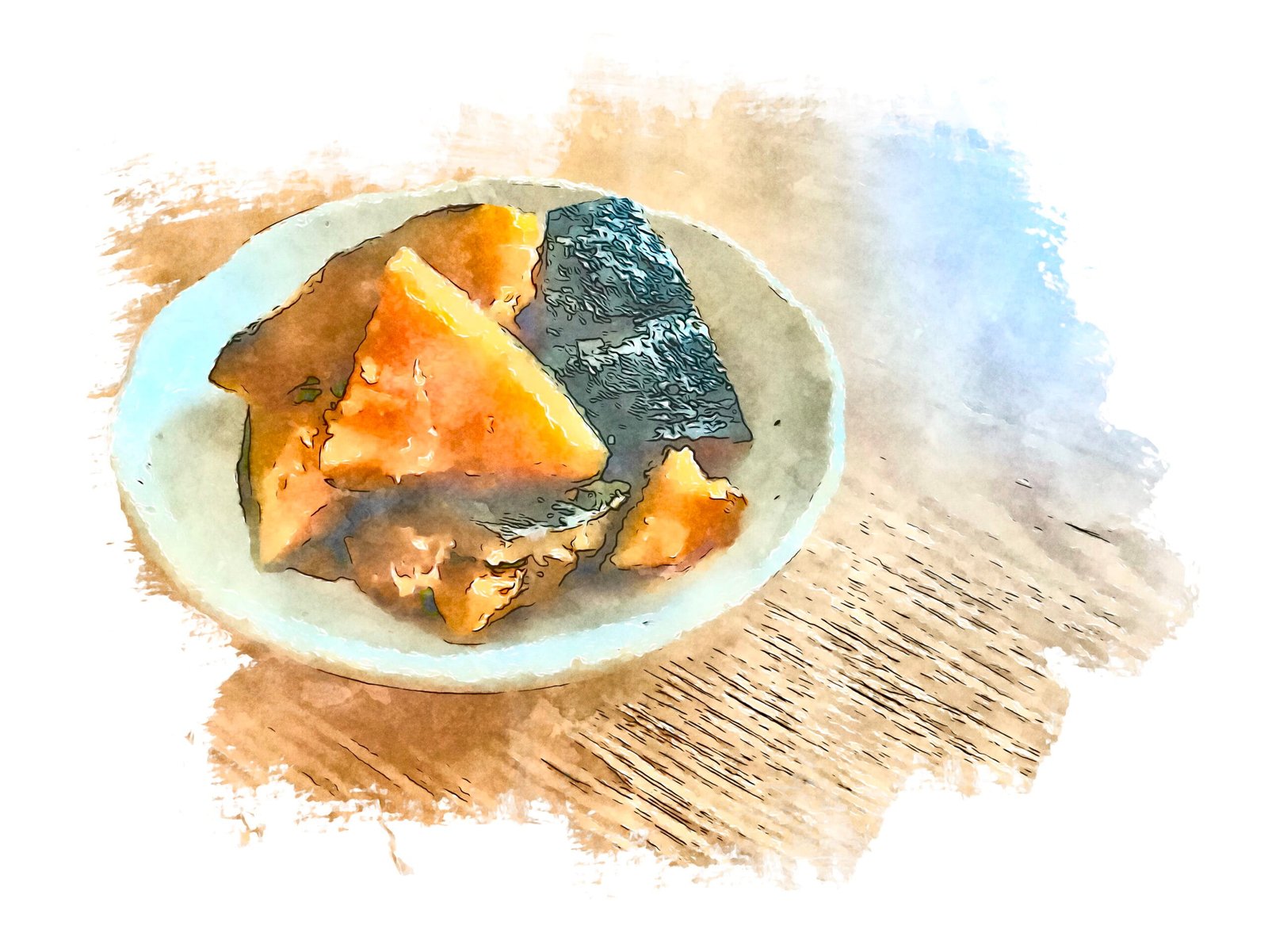

かぼちゃの煮物
Braished kabocha squash is an example of nimono (煮物, nee-moh-noh), the Japanese term for braised dishes. Braising is one of the five methods prescribed by the fundamental principle of shojin ryori—and Japanese cuisine in general—known as gomi-goshoku-goho. This dish is a classic example of this way of cooking, and perhaps the most widely known as well.
Kabocha are a winter squash, with their primary season being from September through December. In Japan, there is also a brief secondary harvest season around June. That is a good thing, because this dish is so irresistible that once you make it you will want to eat it as often as you can get your hands on them.
When shopping for kabocha look for a dark green skin with a bumpy, mottled appearance. It should have no soft spots, be heavy for its size, and have a deep hollow sound when you tap on it with your knuckles. When you find ripe ones at a good price, don’t shy away from stocking up on them. They hold exceptionally well if stored in a cool, dark space.
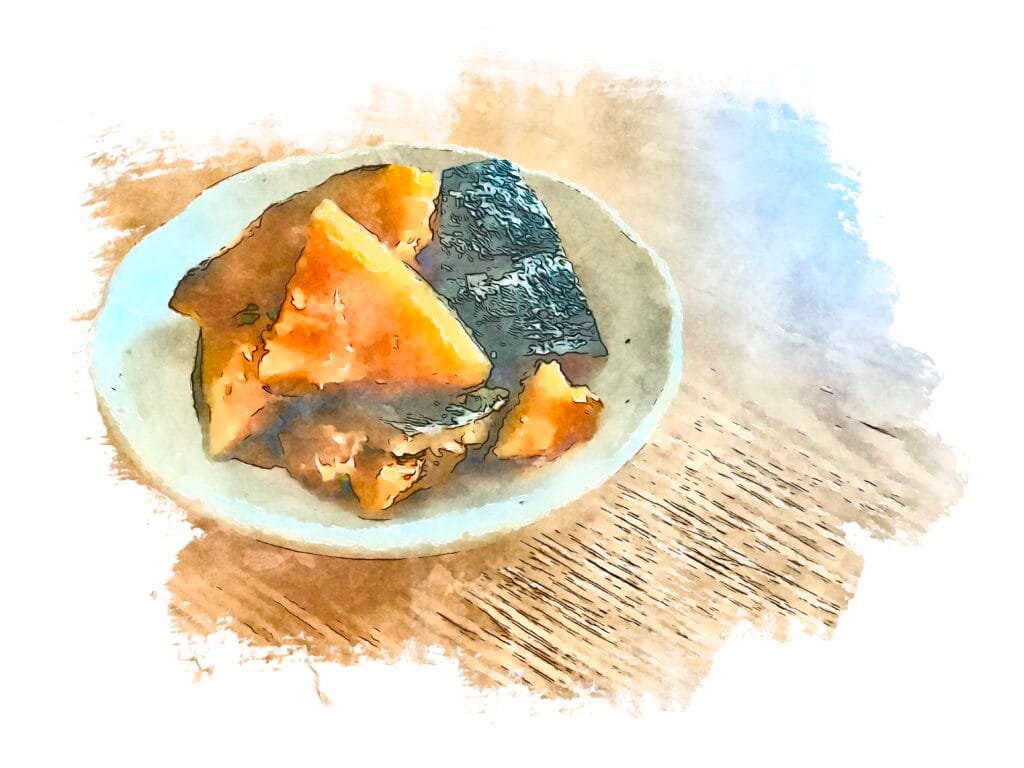
BRAISED KABOCHA SQUASH
INGREDIENTS:
INSTRUCTIONS:
- Preparing the kabocha. Cut the kabocha in half vertically, and use a spoon to remove the seeds. Set aside for another use. Use a vegetable peeler to remove some of the skin (see the video for a demonstration), then cut each half into 4-6 wedges each. Finally cut each wedge into pieces about 1″ in length.
- Cooking the kabocha. Arrange the pieces of kabocha in a pot large enough to hold them snuggly in a single layer. Add the remaining ingredients except for the soy sauce and bring to a boil. Reduce the heat to a simmer, and cover with a drop lid for 8-10 minutes.
- Finishing the dish. Remove the drop lid, and add the soy sauce. Increase the heat to high and cook until the liquid has reduced to about 1-2 tablespoons. Remove from the heat and serve. If not serving immediately, cool thoroughly and store in an airtight container for up to 3 days in the refrigerator.
Note
SUBSTITUTIONS. Kabocha is a winter squash in the same family of vegetables as cucumber and watermelon (Cucurbitaceae). Often it is mistakenly referred to as pumpkin due to its appearance. It has a denser texture than pumpkin, however, which lends itself to this method of cooking. The best options if you can’t find kabocha are either chestnut or Blue Hubbard squashes. Most other varieties — pumpkin as well — will break down and turn to soup due to their higher water content.