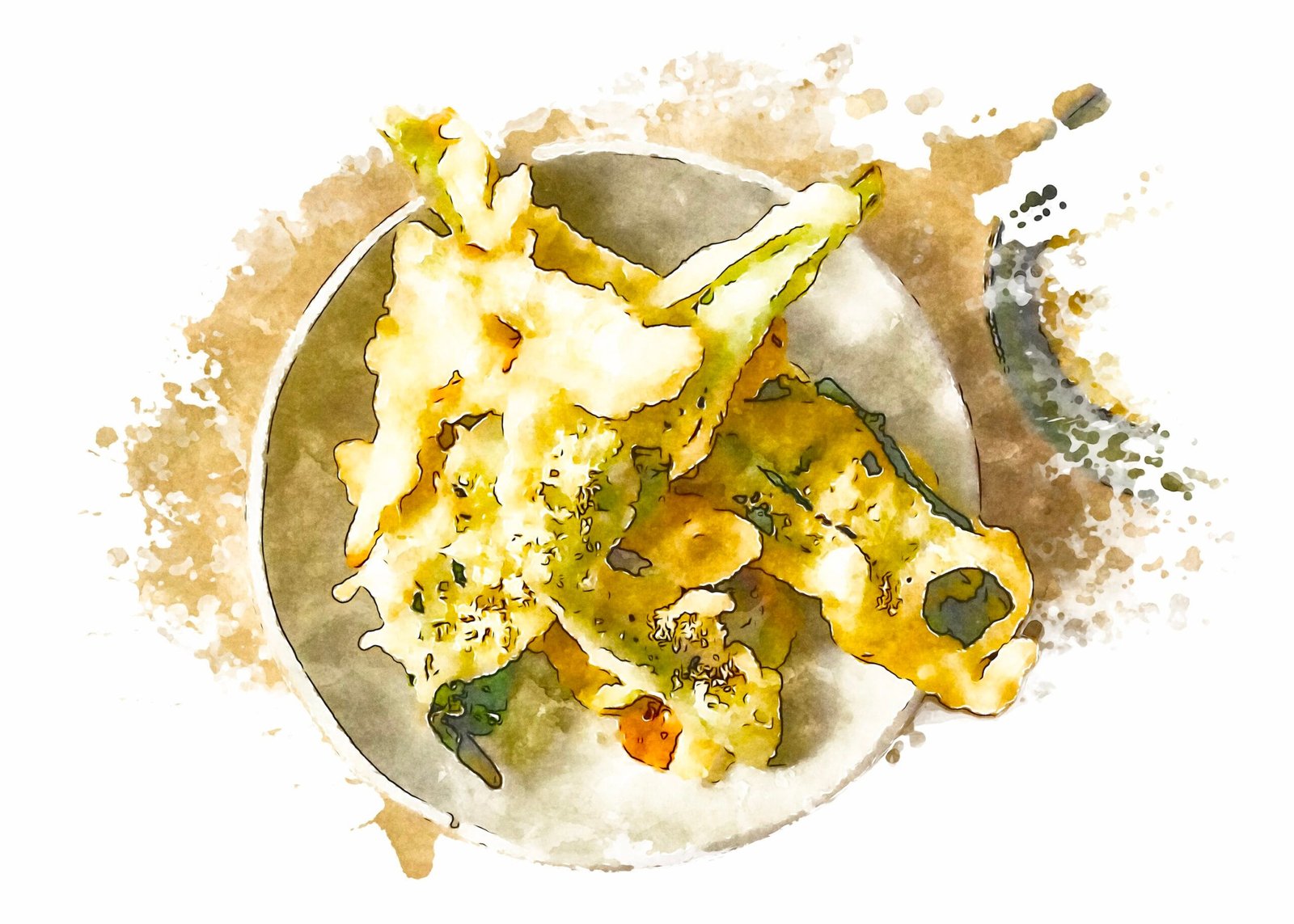

春野菜の天ぷら
Most people know tempura as Japanese. Fewer know the word is Portuguese. When Jesuit missionaries arrived in Nagasaki in the mid-sixteenth century, they brought with them the practice of frying vegetables in batter during Lent and the quarterly fasting periods they called têmporas — the Ember Days. The battered vegetables that they fried as part of their religious observations became the prototype for what Japan would eventually make its own.
But the missionaries did not introduce frying to Japan. They introduced batter-frying: not a new technique, a variation on an existing one. Buddhist temples had been frying in sesame oil for centuries before any European ship reached Tanegashima. Ganmodoki (がんもどき), the deep-fried tofu fritters whose name means “pseudo-goose,” is a temple food that predates Portuguese contact entirely. The merger was catalyzed by compatibility, not by void.
The Fifth of Five: Frying as Doctrine
In shōjin ryōri, every properly composed meal is governed by a system of interlocking fives known as Goshiki-Gomi-Gohō (五色・五味・五法) — Five Colors, Five Flavors, Five Methods. The Five Methods are: raw (生, nama), simmered (煮, niru), grilled (焼, yaku), steamed (蒸, musu), and fried (揚, ageru). A meal that omits any one of these methods is considered imbalanced.
This is what makes shōjin tempura so different from its secular counterpart. In a regular restaurant, tempura is a dish — something you order. In the temple kitchen, it is an essential component of the whole. The tenzo (典座, head cook) includes a fried element not simply because it tastes good, but because the underlying system prescribes it. The fourth of the Five Contemplations recited before every monastic meal states: “We regard this food as medicine to sustain our life.” For monks living on a diet that excludes all animal products, the calories and fats provided by fried food are not excessive indulgence. They are metabolic necessity.
Adapting Tempura for Shōjin Ryōri
Temple cooking is plant-based and adheres to the teaching of ahimsa — non-violence and compassion toward all living beings. All animal derived products are prohibited. Where all other prescriptions are concerned — the avoidance of the Five Pungent Roots, for instance — I make adaptations for the lay kitchen. The gyōja ninniku in this recipe is an example of this.
The traditional frying oil is sesame (ごま油, goma abura), which arrived in Japan from China alongside Buddhism itself. Its nutty, toasted aroma is the smell of temple cooking — distinct from the neutral oils used in most commercial kitchens.
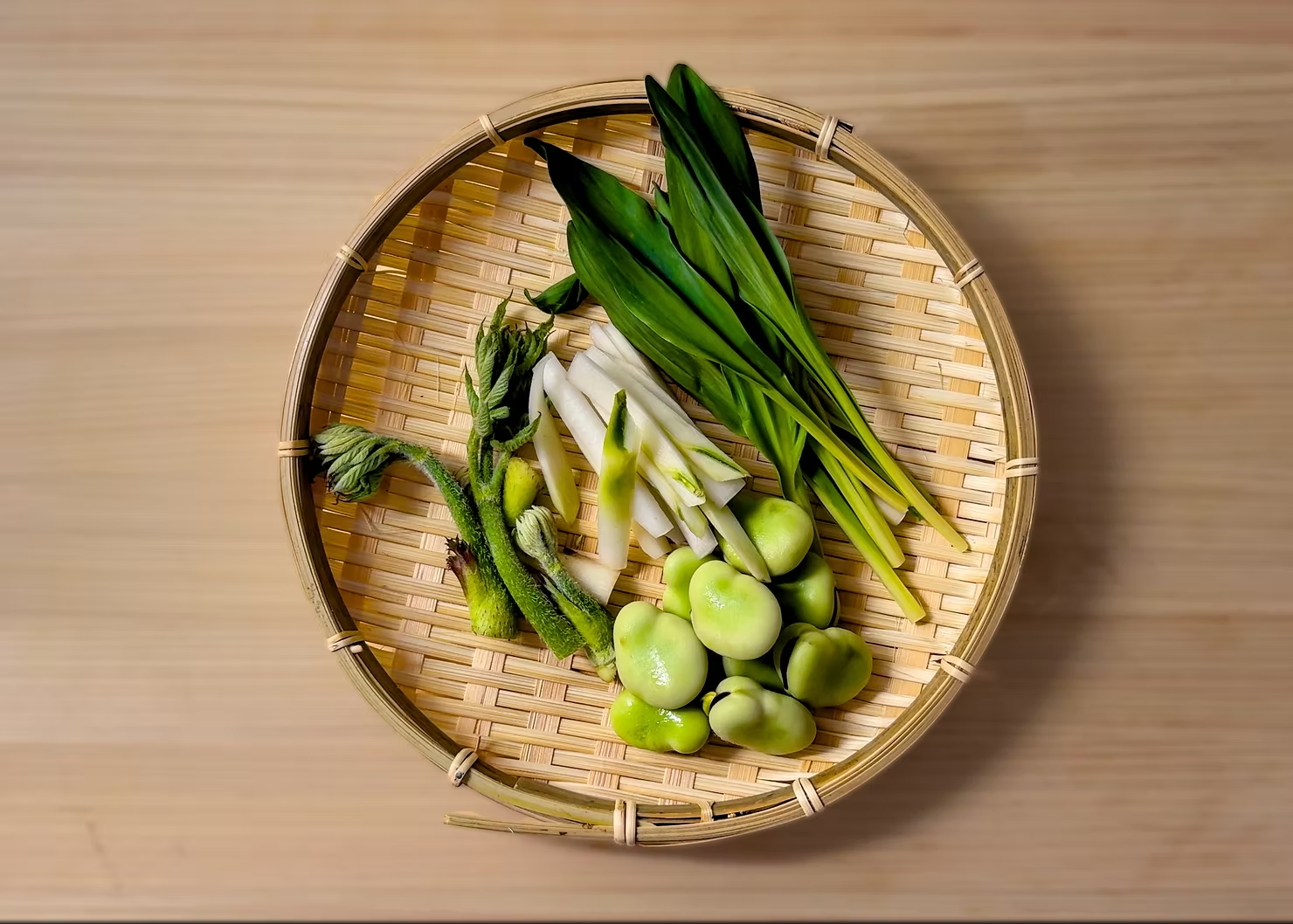
The eggless unseasoned batter produces a pale, translucent coating that allows the vegetable’s own color, shape, and aroma to show through: the pastel green of shelled fava beans, the fern-like tips of udo, the subtle aroma of wild mountain garlic. The crispy batter provides the contrast needed to bring attention to the inherent texture of the ingredients.
Cooking as Practice
Dōgen Zenji wrote in the Tenzo Kyōkun (典座教訓, “Instructions to the Cook”) that the tenzo must handle ingredients “as if they were the pupils of your own eyes.” He articulated three mental attitudes for the cook: Joyful Mind (喜心, kishin), Parental Mind (老心, rōshin), and Magnanimous Mind (大心, daishin). These attitudes are method-agnostic — they apply with equal force whether you are washing rice or standing before a pot of hot oil.
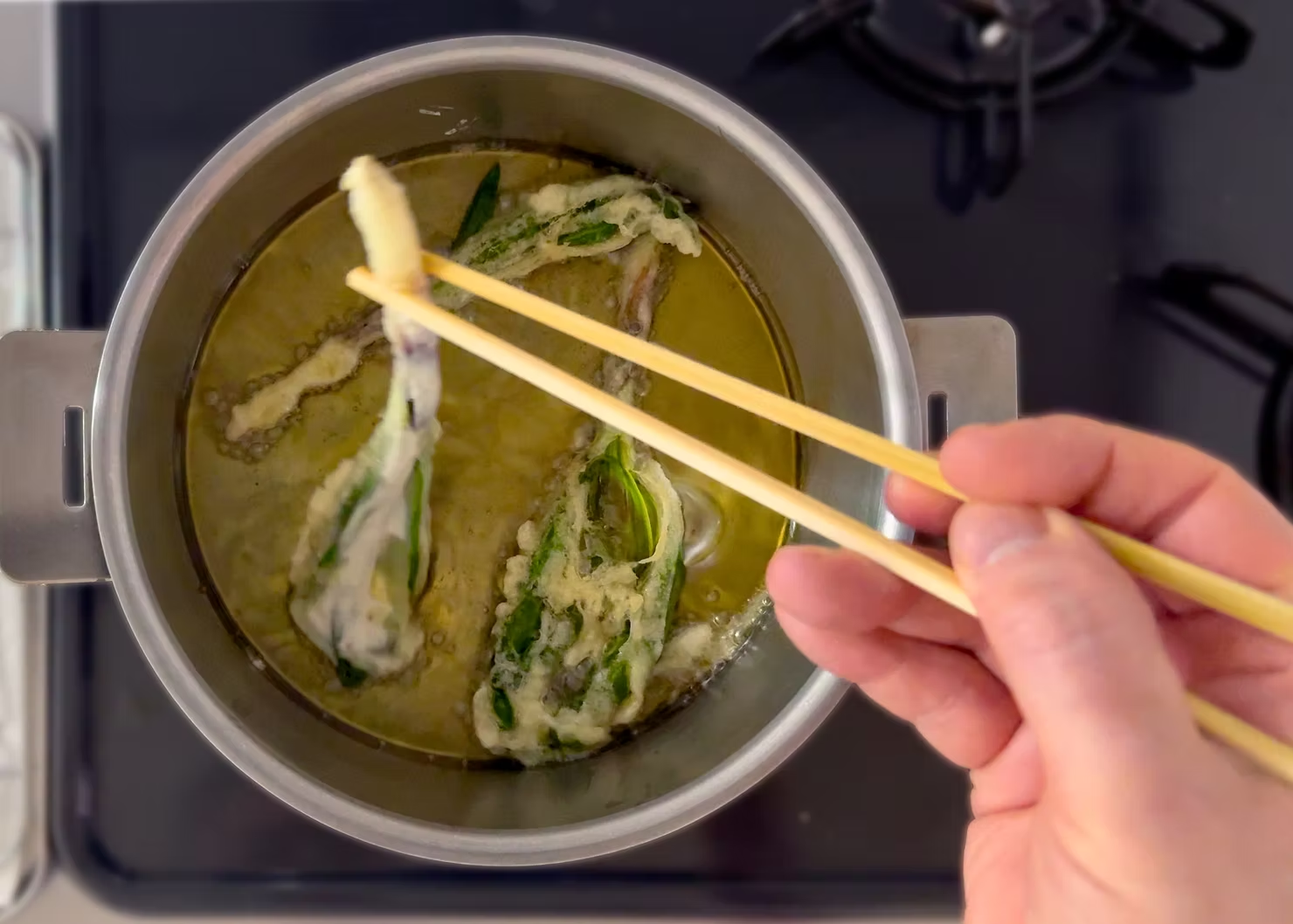
Standing at the stove with oil at temperature requires a particular kind of attention. You cannot walk away. You cannot multitask. The batter goes in, and you watch. You listen to the sound evolve from the initial cacophony produced as the water in the batter reacts to the hot oil into steady even crackle. You observe the color and texture shifting. You lift at the precise moment when the batter is set, the vegetables just cooked through. This is not a meditation about cooking. This is cooking as meditation. Attention itself is the practice.
Seasonal Notes
It is spring here in Hokkaido, and there is no shortage of ingredients to work with: mountain vegetables — taranome(aralia buds), warabi (bracken fiddleheads), fuki (butterbur) — carry a delicate bitterness that frying softens without eliminating. But tempura is highly adaptable, as the seasons fade one into the other. In summer, eggplant and peppers. Autumn brings sweet potato, kabocha, and maitake mushrooms. Winter brings root vegetables like burdock, taro, and carrot — whose earthiness deepens in hot oil. Let the landscape and the season write the menu. They contain wisdom on par with the sutras.
SPRING VEGETABLE TEMPURA
Ingredients
Tempura Batter
Vegetables
Instructions
- MAKING THE TEMPURA BATTER. Whisk the water and the mayonnaise together until they are homogeneous. It will look like almond milk when done. Add the flour to a large bowl and pour in the liquid. Use a pair of chopsticks to gently mix the batter. Do not overmix; this will activate the gluten and result in a dense chewy dough, rather than a crispy coating when fried. Stop mixing before you think that it looks right to help avoid this. If the batter looks a little bit lumpy that is a good thing. Put the bowl into the refrigerator to keep it cold while you prepare the vegetables.
- PREPARING THE VEGETABLES. Use whatever is local and seasonal wherever you are.
- FRYING THE TEMPURA. Pre-heat the oil to 170°C. Until you get used to judging temperature by listening to the oil, a fryer safe thermometer is recommended.
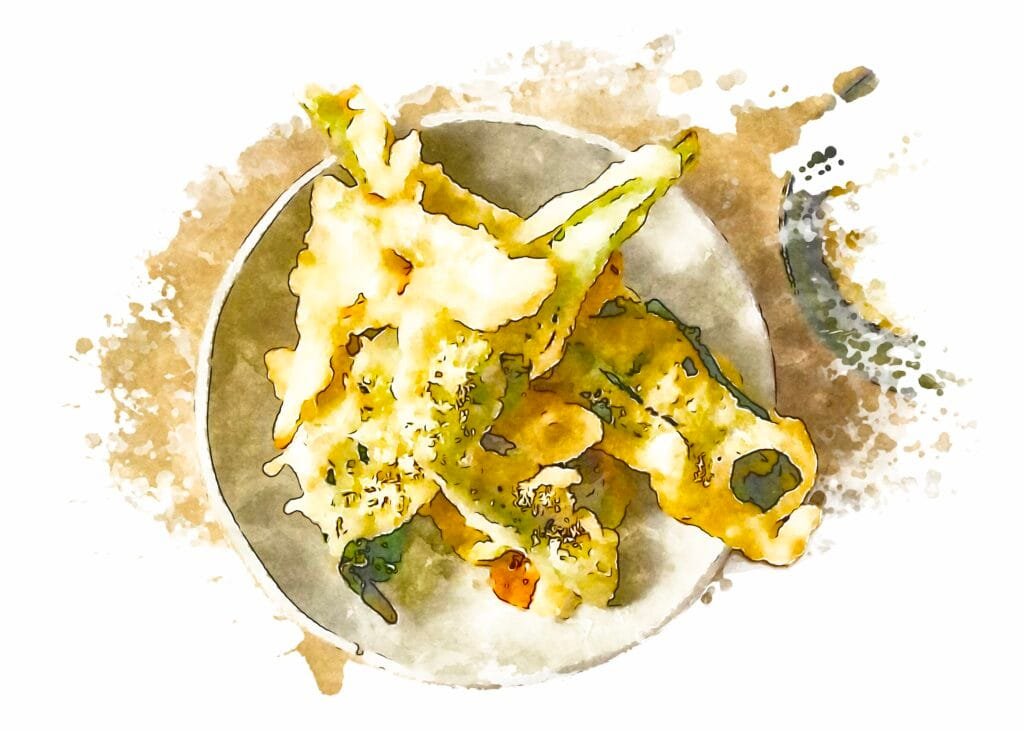
- TO SERVE. Divide the vegetables evenly onto individual serving plates, and serve with a side of plain sea salt or seasoned sea salt such as matcha salt. I made chrysanthemum salt because I had some dried flowers leftover in my kitchen and I didn’t want them to go to waste. A general rule of thumb is to use equal parts salt and seasoning by weight. So if you are using 3 grams of matcha powder, use 3 grams of sea salt. If that is too salty for your taste, just reduce the salt the next time you make it until you get the balance you prefer.
Note
USE A LOW-PROTEIN FLOUR. Cake flour has 6-9% protein content, which is the target range for tempura. Lower protein means less gluten, and less gluten means crispier tempura. If you don’t have cake flour, you can use a combination of all-purpose flour and cornstarch or potato starch (my preference). Just substitute about 1/3 of the total weight of flour with whichever starch you decide to use.
MIX JUST BEFORE FRYING. As the batter sits, the proteins – glutenin and gliadin – in the flour bind together, forming gluten. This is desirable when making bread or pizza dough, but not for tempura. If the batter sits for too long after mixing, rather than light and airy the coating will be dense and chewy. Try to use the batter within 30 minutes of making it.
FRY IN SMALL BATCHES. A drop in temperature slows the cooking process and increases oil absorption, resulting in a less crispy or even soggy texture. The ideal range for frying tempura is 170°C-180°C. Frying in small batches helps keep the temperature constant.