
アスパラガスのからし味噌和え
In May, the asparagus that comes out of Hokkaido is thick, sweet, and faintly grassy at the tip. The vegetable is delicious as is, but when combined with complementary flavors in a balanced manner, the sum of the individual components becomes even greater.
The dish that I am sharing today is what is referred to as an aemono (和え物) — a mixed or dressed dish. The first kanji (和) can also be read as ‘wa,’ expressing the idea of harmony. At first it seems odd that the same kanji is used for two such seemingly distinct words, but the issue really lies in the translation process itself and the attempt to have a one-for-one correlation between Japanese and English.
Taking a deeper look reveals that they are connected on a level English cannot reach. In English we dress salads and sauce dishes — discrete actions applied to ingredients. In Japanese, 和 is understood differently: it is the act of bringing disparate flavors into something cohesive and balanced. Harmonizing them. The disconnect is not in the words themselves, but in trying to understand one language through the lens of another.
This distinction sounds philosophical until you feel the difference in your hands, and ultimately taste it for yourself.
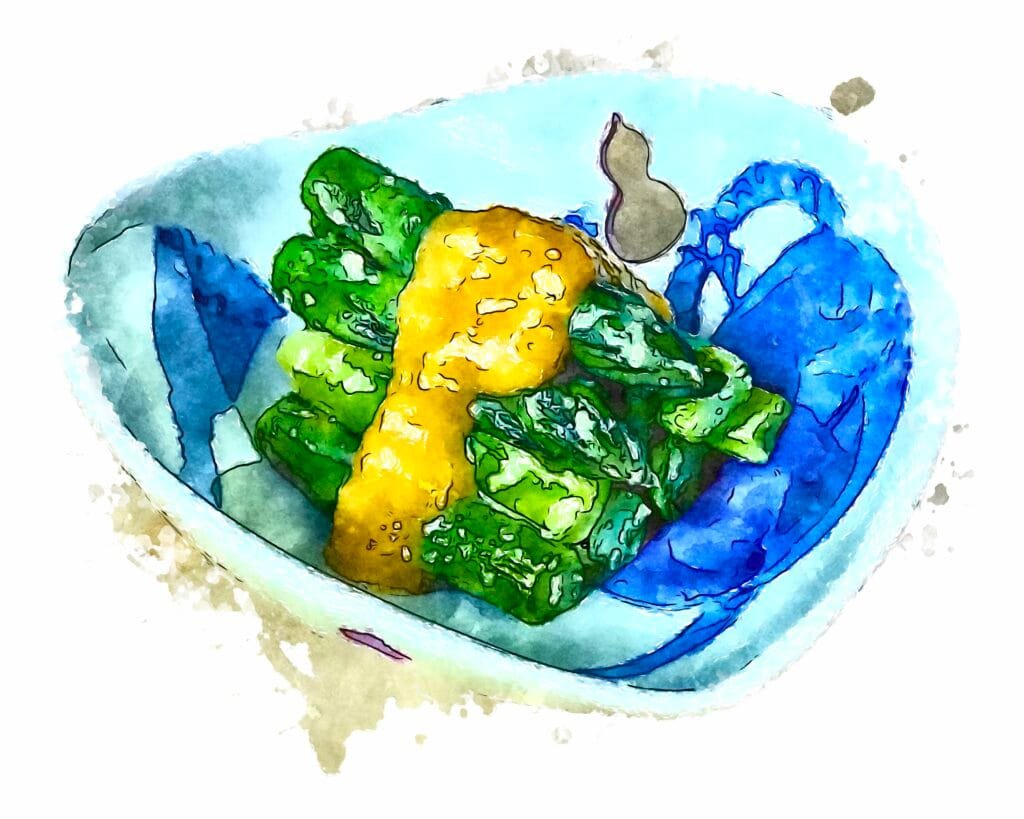
ASPARAGUS WITH MUSTARD-MISO DRESSING
INGREDIENTS:
Karashi Mustard Paste
Miso-Mustard Dressing
INSTRUCTIONS:
- MAKE THE KARASHI MUSTARD PASTE. Mix the dry karashi mustard powder and water together. Stir until a smooth paste is formed. Set aside for 30 minutes to allow the flavor and heat to develop.
- PREPARE THE ASPARAGUS. Wash the asparagus under cold running water. Trim the woody stem ends from the bottom of the asparagus and set them aside for another preparation such as soup. Cut the asparagus stalk into 1.5″ length pieces, keeping the tips separate.
- MAKE THE KARASHI-MISO SAUCE. Combine the miso, rice vinegar, mustard paste, and sugar in a bowl and mix it together with a spoon or whisk. The texture will depend upon what type of miso you use. What you are trying to achieve is a homogeneous mixture, not necessarily a smooth texture.
- HARMONIZING THE INGREDIENTS. Add the asparagus to a mixing bowl with about half of the karashi-miso sauce. Gently toss by hand until the sauce has evenly coated the asparagus. Eat a piece to see how it is tasting at this point. Keep adding more of the karashi-miso little-by-little until you feel that the flavors are in balance.
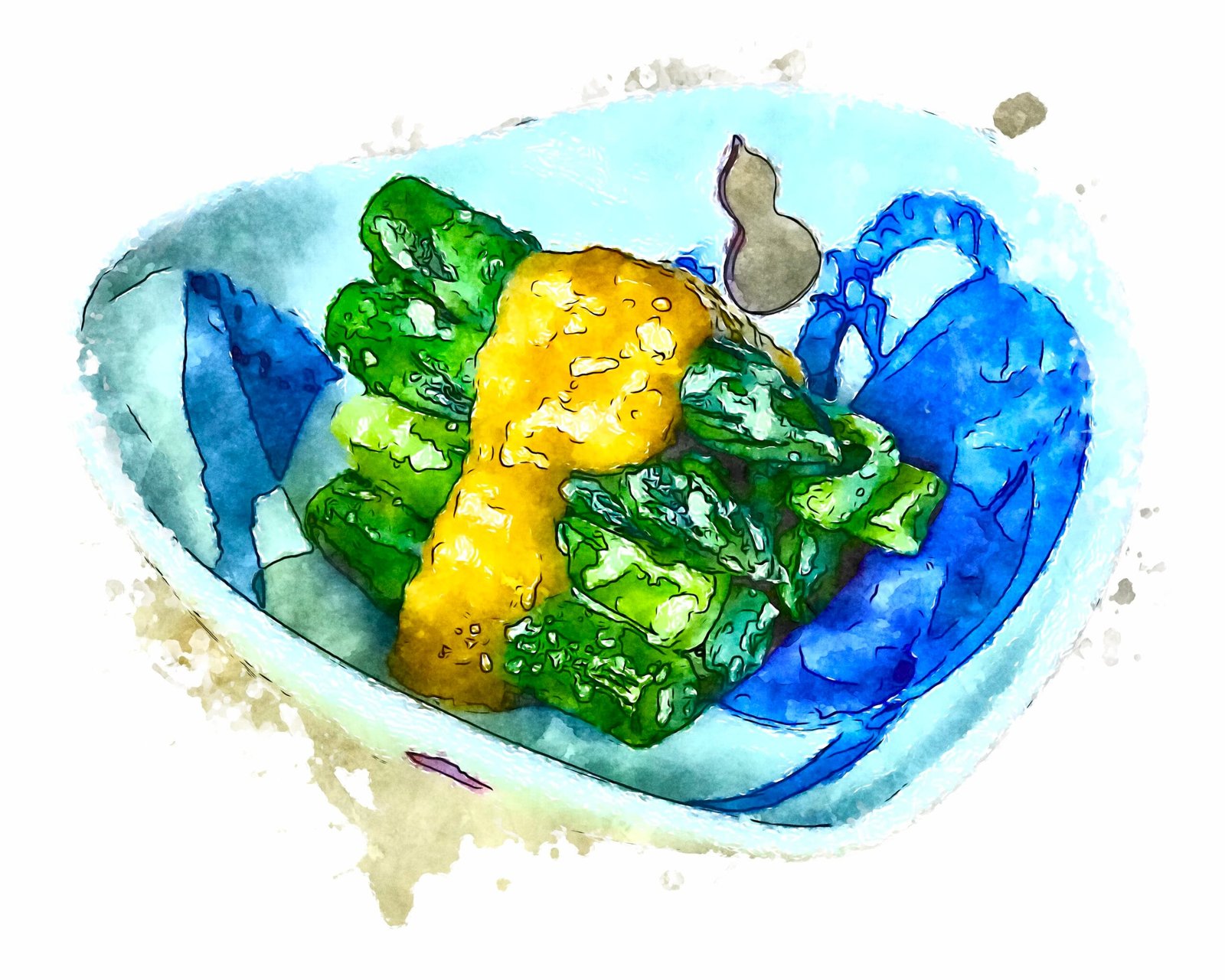
- SERVING. Divide the asparagus equally between two shallow serving bowls, arranging them into neatly stacked piles. Reserve the tips for the top of the pile. Spoon a small amount of the sauce over the top of the asparagus and serve.
Note
SUBSTITUTIONS. I am using asparagus in this particular version, but the recipe is really for the sauce. The dish can be adjusted seasonally by swapping out the asparagus for whatever is local and seasonal. It works equally well with broccolini, cardoons, and most other stalky vegetables.